Aida Fabric Counts Explained: 11 vs 14 vs 16 vs 18
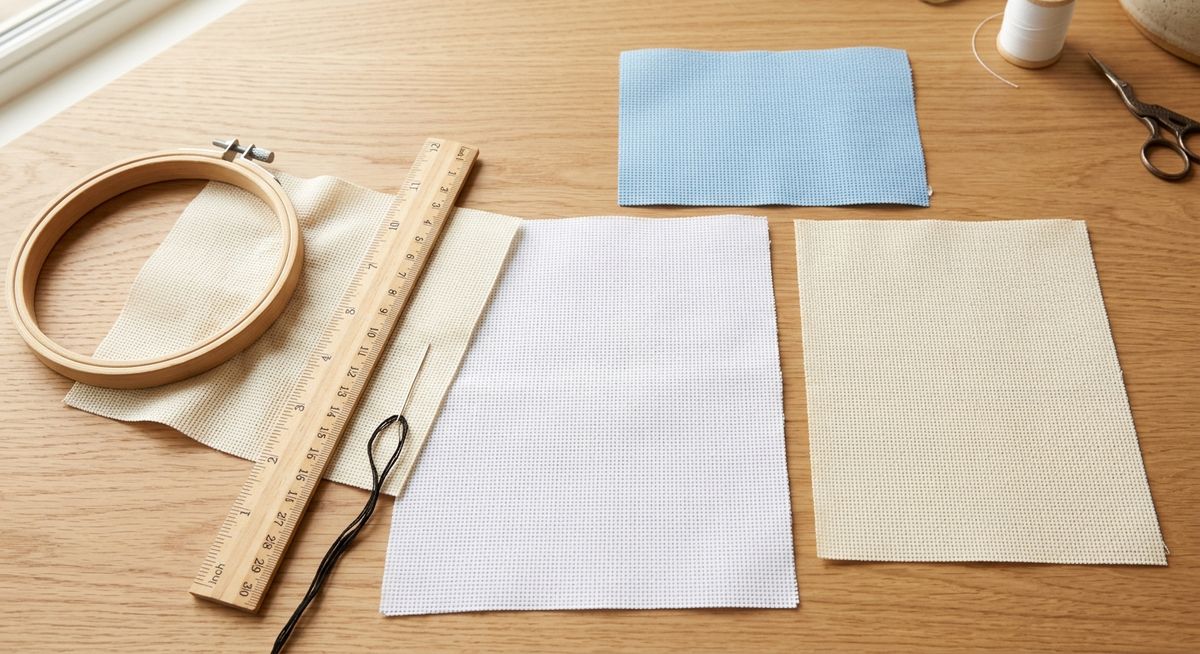
Aida fabric is the foundation of most cross-stitch work, and the choice you make before you even thread a needle has a bigger impact on your finished piece than most beginners realize. The count determines the scale of your stitches. The color shapes how your thread colors read — sometimes dramatically. The brand affects weave consistency, stiffness, and whether you’ll be fighting the fabric or working with it.
This guide covers everything you need to decide which Aida to buy for your next project.
What Is Aida Count, and Why Does It Matter?
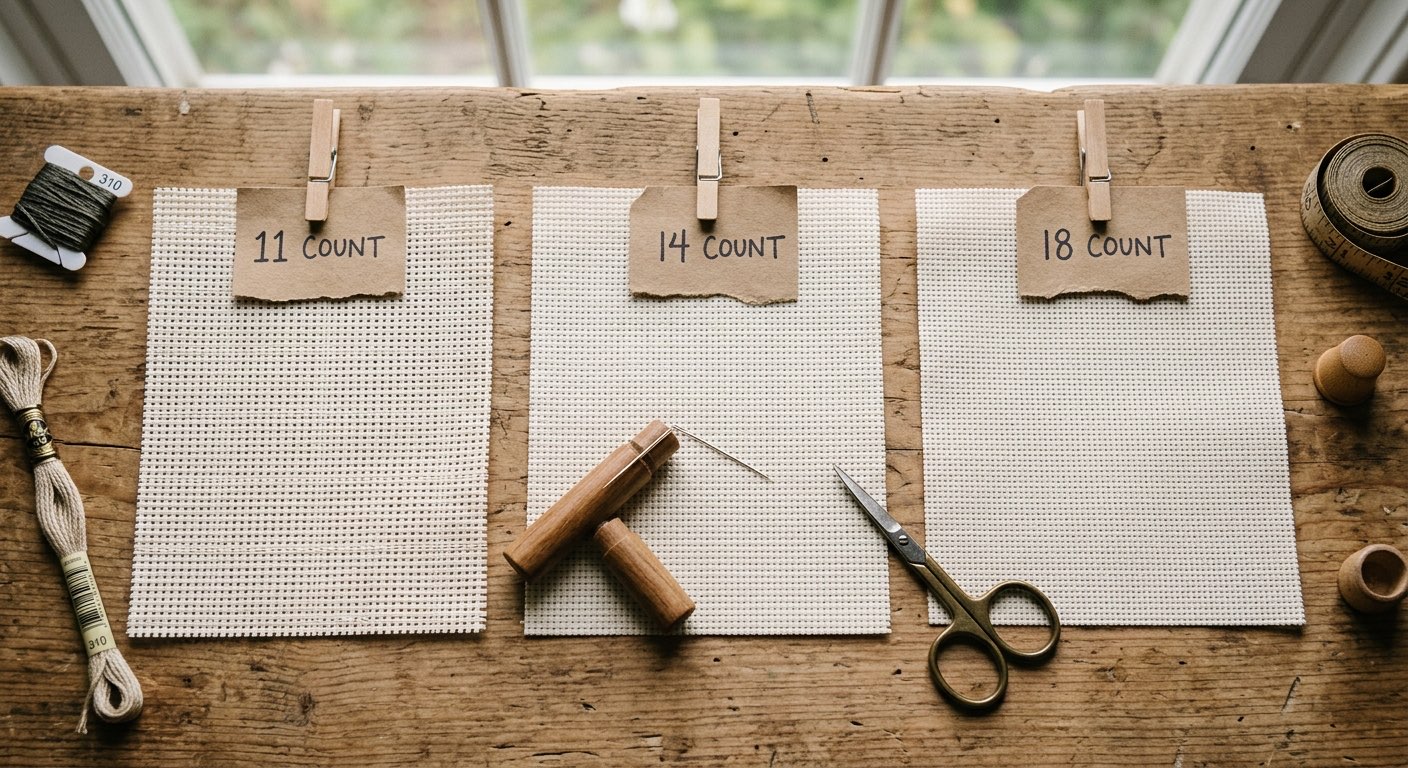
“Count” refers to the number of stitches per inch — specifically, the number of threads per inch in the weave. Higher count means more threads packed into an inch, which means smaller stitches and finer detail. Lower count means bigger holes and bigger stitches.
A design charted at 100 x 100 stitches will finish at about 7.1 inches on 14-count Aida, about 9 inches on 11-count, and about 5.6 inches on 18-count. The chart is exactly the same. The finished size and the visual texture of the piece are completely different.
Count also affects how long a project takes. Fewer, larger stitches on 11-count go faster but look chunkier. More, smaller stitches on 18-count take longer but produce a smoother, more detailed result.
11-Count Aida: When Bigger Is Better
11-count Aida has the largest holes of any standard fabric — about 0.09 inches between intersections, which makes it very forgiving for people who are new to threading needles or who have limited fine motor control.
Who should use it:
- Children learning to stitch (the holes are genuinely easy to see and hit)
- Stitchers with vision difficulties who don’t want to use magnification
- Anyone making a large decorative piece — wall hangings, rugs, or oversized samplers — where you want visible stitch texture to be part of the aesthetic
- Quick projects where you want something finishable in an evening
The honest limitation: Finished pieces on 11-count can look blocky up close, especially for designs with curves or fine detail. Diagonal lines look stair-stepped more noticeably than on 14-count. For most adult stitchers following modern patterns, 11-count is a step down in quality unless the large scale is intentional.
That said, there’s a real charm to 11-count for certain project types — Christmas ornaments with bold geometric designs, for example, or pieces designed to be framed large and viewed from a distance. Colors like DMC 321 Christmas Red and DMC 699 Christmas Green read beautifully at scale on 11-count.
Shop 11-count Aida fabric on Amazon
14-Count Aida: The Standard (and for Good Reason)
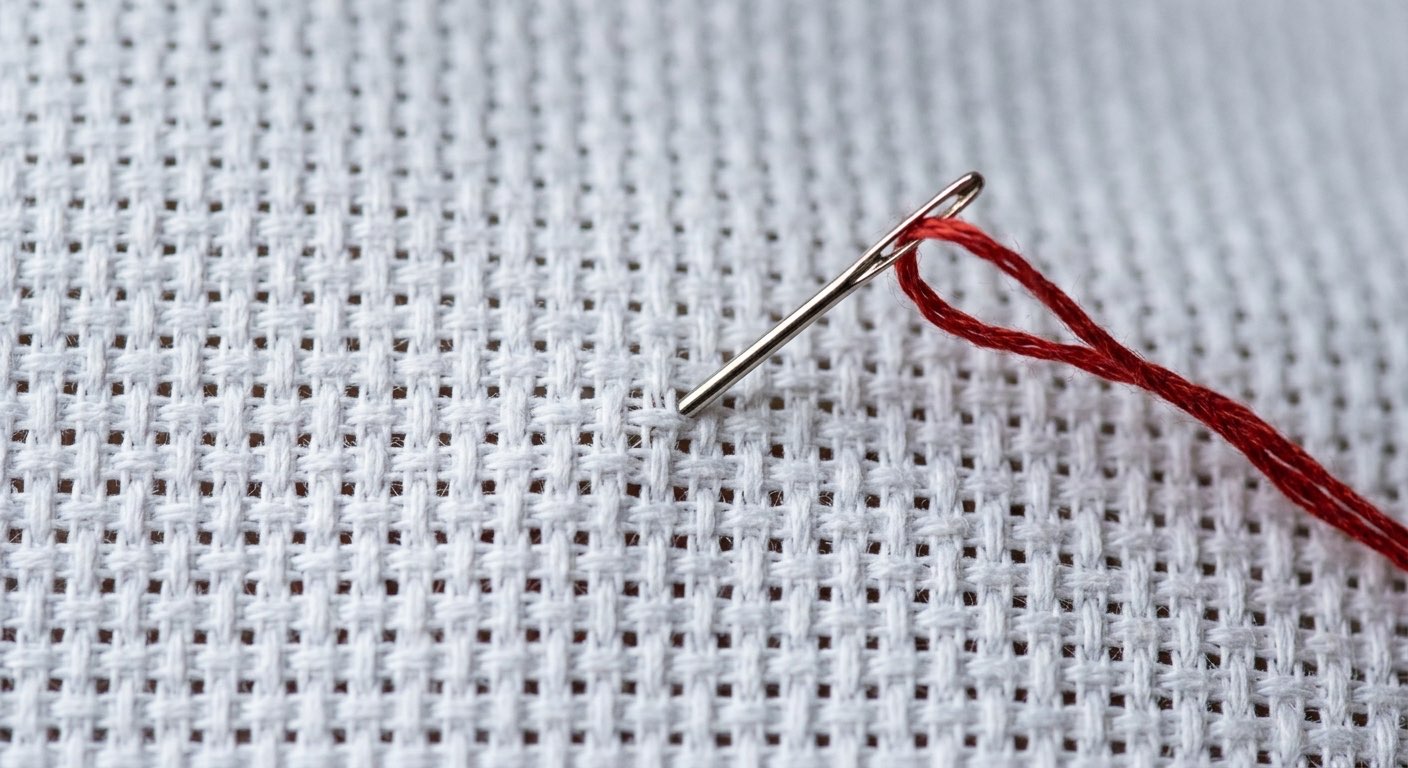
If you’ve stitched before, you’ve almost certainly stitched on 14-count. The overwhelming majority of published patterns are designed for it. It’s the default, the benchmark, the reference point everything else is measured against.
14-count gives you approximately 14 stitches per inch. A typical needle — a #24 tapestry needle — threads through the holes without effort. You can work with two strands of floss, which is the standard for solid coverage on 14-count. The holes are visible without magnification under decent light, and mistakes are easy enough to frog without destroying the weave.
Why 14-count works for most people:
- Nearly every published pattern is designed for it
- Easy to find locally and in bulk
- Standard 8.5x11 fabric squares, cut pieces, and rolls are all widely available
- Two strands of DMC or Anchor gives full, clean coverage
- Forgiving enough for beginners, refined enough for detailed designs
The stitch size on 14-count is about 0.07 inches — large enough to see clearly, small enough that a 50-stitch-wide motif fits in roughly 3.5 inches.
For most people reading this: just use 14-count. It’s not a compromise, it’s the industry standard for a reason.
Shop 14-count Aida fabric on Amazon
18-Count Aida: For Detail Work and Miniatures
18-count is where the work gets genuinely fine. At 18 stitches per inch, a 100-stitch-wide design fits in about 5.6 inches — and the visual texture of the piece smooths out considerably. Curves look like curves. Gradients blend more naturally. The piece reads from a distance more like a small painting than a grid.
The tradeoff is that 18-count demands more from you:
- Holes are small enough that you’ll want a magnifying lamp (see our magnifying lamps guide for recommendations)
- You typically use one strand of floss rather than two, which means coverage is thinner and technique matters more
- Threading the needle is harder — a needle threader becomes essential
- Mistakes take more effort to correct cleanly
Who 18-count is for: Stitchers who want to create framed miniatures, intricate portraits, or small ornaments with high detail. Also popular for cross-stitch jewelry and cards where scale is a design constraint.
It’s not a step up in prestige — it’s a different tool for a different job. But if you’ve done a few projects on 14-count and you’re curious whether you can push the detail further, a small 18-count piece is a satisfying experiment.
Shop 18-count Aida fabric on Amazon
Aida Color: White vs. Cream vs. Colored Fabric
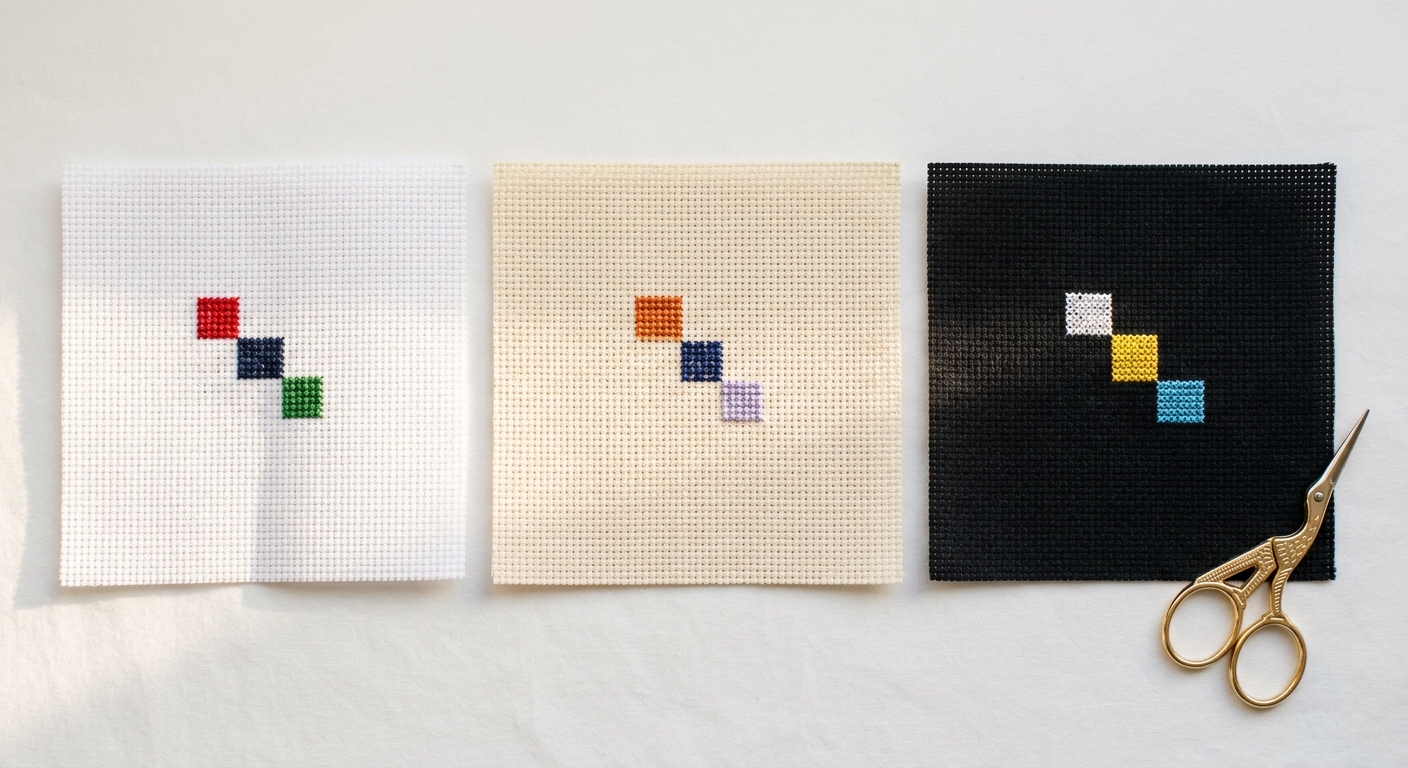
This is where a lot of stitchers don’t think carefully enough, and it shows in their finished pieces. The fabric color is a part of your palette whether you intend it to be or not.
White Aida
White Aida is the most widely available and the default for most printed patterns. The colors appear at full, accurate saturation against a white ground. DMC 310 Black backstitch pops against white. Pale yellows and creams are visible. The finished piece reads crisp and high-contrast.
The downside of white: it’s harsh. Under certain lighting, the unstitched white of a large project can feel glaring. And if you’re stitching a piece with any amount of “negative space” — areas of unstitched fabric that are meant to show — stark white can feel cold rather than airy.
Cream / Antique White Aida
Cream Aida (sometimes sold as “antique white” or “natural”) is the softer choice. It reads as a warm neutral, which makes colors like DMC 3865 Winter White and DMC 3823 Ultra Pale Yellow blend into the background rather than disappear. Very pale colors that would be nearly invisible on white — especially light skin tones, very pale pinks, near-whites — can vanish entirely on cream, so check your palette carefully.
For sampler designs, botanical motifs, and anything with a traditional or vintage aesthetic, cream Aida is almost always more flattering than white. It photographs warmly and looks natural in a wood or neutral frame.
The critical caveat: if a pattern specifies white fabric and includes a lot of white or very light thread, check whether cream fabric will make those light threads invisible before committing.
Colored Aida
Colored Aida — navy, black, red, sage, grey — is used for specific effects and isn’t a general-purpose substitute. Black Aida with white floss for a high-contrast monochrome effect. Navy with silver or gold metallic thread for a nighttime or celestial aesthetic. The results can be stunning; the execution is harder.
On dark fabric, colors read differently than they do on white. A deep red like DMC 815 Medium Garnet will barely show on navy fabric. Lighter colors in the yellows and whites will pop dramatically against dark ground. You’re essentially working in reverse — building up light tones rather than dark ones.
Colored Aida also uses thread differently. On dark fabric you often need more strands for coverage because the darker ground shows through. Most patterns don’t account for this, so colored Aida is really for confident intermediate-to-advanced stitchers working from experience or designing their own pieces.
Shop colored Aida fabric on Amazon
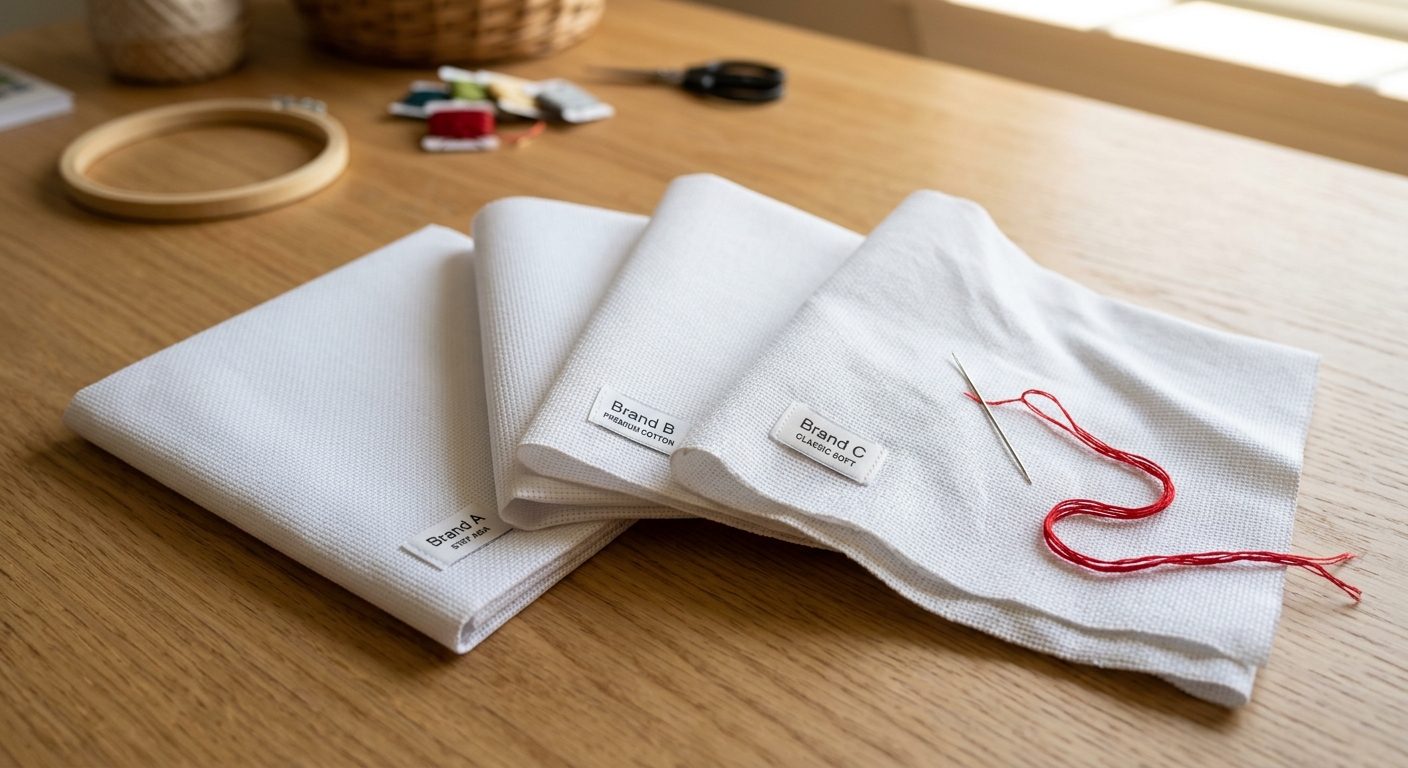
Brand Comparison: DMC, Charles Craft, and Zweigart
Not all Aida is the same. The weave quality, thread thickness, stiffness, and sizing all vary by brand, and these differences affect how you stitch.
DMC Aida
DMC’s Aida fabric is the most widely available in the US, sold in craft stores and online in cut squares, full-yard pieces, and pre-packaged amounts. It’s solid, reliable fabric — stiff enough to work with in a hoop without a lot of distortion, woven consistently enough that the holes line up. No complaints.
DMC Aida tends toward the stiffer side, which some stitchers like (it holds its shape in a hoop without constant re-tightening) and others don’t (the stiffness can feel scratchy or resist the needle slightly). Washing softens it noticeably.
It’s not the most premium option, but it’s widely available, moderately priced, and gets the job done reliably. Good for beginners and practice pieces.
Shop DMC Aida fabric on Amazon
Charles Craft Aida
Charles Craft is a US-based manufacturer that’s been a staple in American needlework for decades. Their fabric is notably softer than DMC Aida straight from the package, with a slightly looser weave that some stitchers find easier to work with.
Charles Craft also produces a wider variety of specialty Aida — their perforated plastic, perforated paper, and Fiddler’s Cloth (a linen-look blended fabric) are popular for ornaments, bookmarks, and special-occasion pieces. Their standard Aida is reliable, available in a wide color range including cream, and well-regarded by intermediate stitchers.
If you find DMC’s Aida a bit stiff or scratchy, Charles Craft is worth trying.
Shop Charles Craft Aida fabric on Amazon
Zweigart Aida
Zweigart is a German company and widely regarded as producing the highest-quality Aida on the market. It’s what serious stitchers use for heirloom pieces and anything they plan to keep for decades.
What makes Zweigart different: the weave is exceptionally even and consistent, the fabric drapes beautifully, and the holes are perfectly uniform. Working on Zweigart feels noticeably smoother — the needle moves through the fabric more easily, and the finished piece lies flat without effort. It’s also the standard for competition-quality work.
The catch is price and availability. Zweigart is significantly more expensive than DMC or Charles Craft, and you’re less likely to find it at a local craft store — it’s usually ordered online or through a specialty needlework shop. For an ordinary practice piece or an early project, it’s overkill. For something you’re planning to frame as a gift or keep for a long time, it’s worth every penny.
Shop Zweigart Aida fabric on Amazon
How Much Fabric Do You Need?
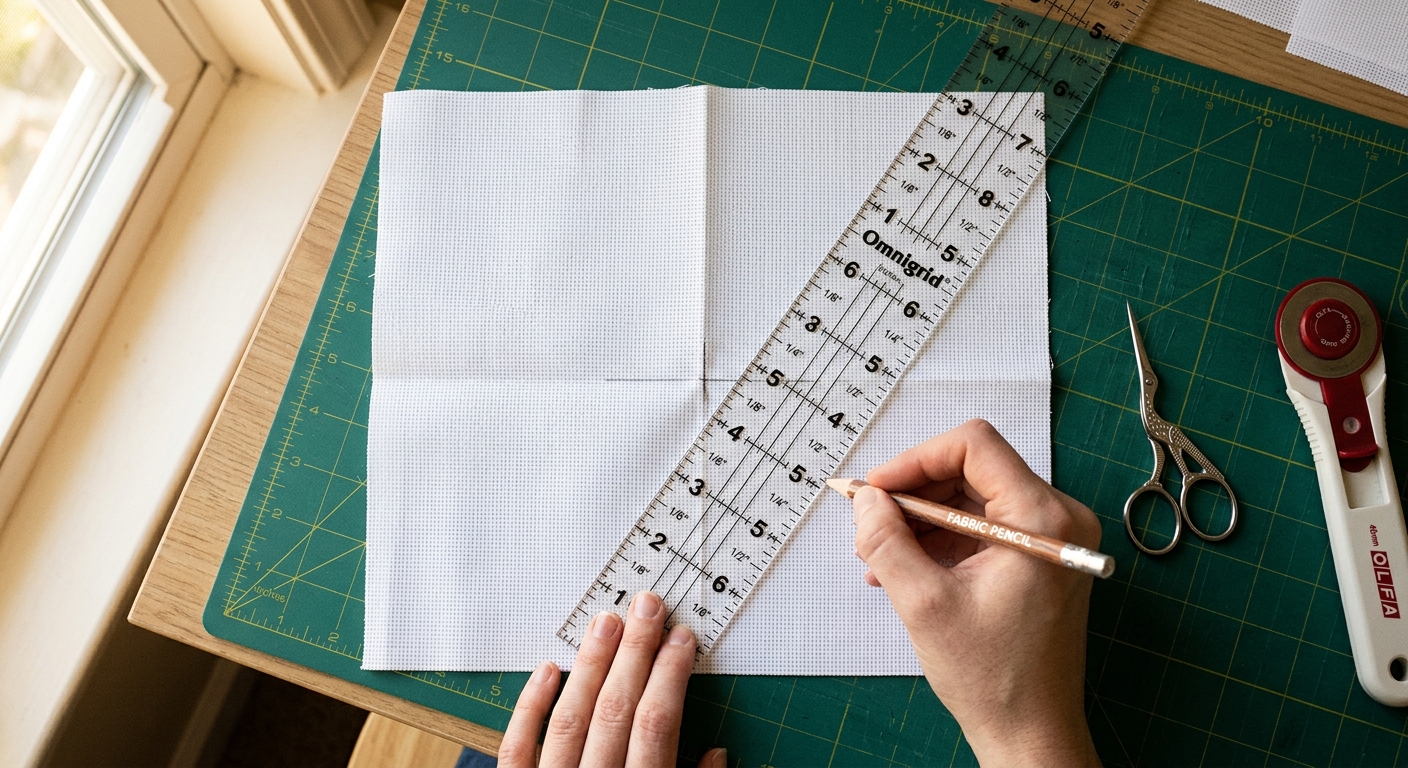
The standard formula: take your design’s stitch dimensions, divide by your fabric count to get the finished design size in inches, then add at least 3 inches on every side for framing margin.
So for a 120 x 100 stitch design on 14-count:
- Width: 120 ÷ 14 = 8.6 inches
- Height: 100 ÷ 14 = 7.1 inches
- Fabric needed: 14.6 x 13.1 inches minimum (add 3 inches each side)
This matters more than people think. Running out of margin is genuinely painful — you lose the ability to frame properly, re-hoop cleanly, or correct positioning errors. When in doubt, buy bigger. Fabric is cheap; starting a piece over isn’t.
For large projects, buy fabric from the same production run if you can. While Aida color is generally consistent, slight dye lot variations exist in whites and creams, and a visible tonal shift halfway through a piece is not what you want.
A Few Honest Opinions
14-count white Aida from any major brand is the right choice for most projects most of the time. It’s not glamorous advice, but it’s true.
Zweigart is worth upgrading to once you’ve finished a few pieces and you know you love this hobby. The quality difference is real and it’s something you feel in every stitch.
Don’t let fabric choice paralyze a purchase decision. The difference between DMC and Charles Craft Aida is minor compared to the difference between starting a project and not starting one. Pick something in the right count and the right color and stitch it.
Cream almost always photographs better than white. If you’re going to share your work online or frame it as a gift, cream Aida gives the piece a softer, more professional look in most lighting conditions.
For reference, color choices for your thread will look subtly different depending on your fabric color. Browse the color families to plan your palette with this in mind — and check conversion pages if you need to match a color from a pattern across brands.
Quick Reference: Which Aida Is Right for You?
| Situation | Recommendation |
|---|---|
| First project, beginner | 14-count white, DMC or Charles Craft |
| Child or low vision | 11-count white, any major brand |
| Detailed portrait or miniature | 18-count white or cream, Zweigart |
| Traditional sampler or botanical | 14-count cream, any major brand |
| Heirloom or gift piece | 14 or 18-count cream, Zweigart |
| Bold seasonal design | 11 or 14-count, white |
| High-contrast decorative piece | Colored Aida, intermediate level |
| Any project you care about | Zweigart, if budget allows |
The fabric you choose sets the stage for everything that follows. It’s worth a few minutes of thought before you buy.
Disclosure: This post contains affiliate links. We may earn a small commission at no cost to you when you purchase through these links. This helps support the site and allows us to continue creating free content.