DMC Color Variations Thread: Complete Guide to Variegated Floss
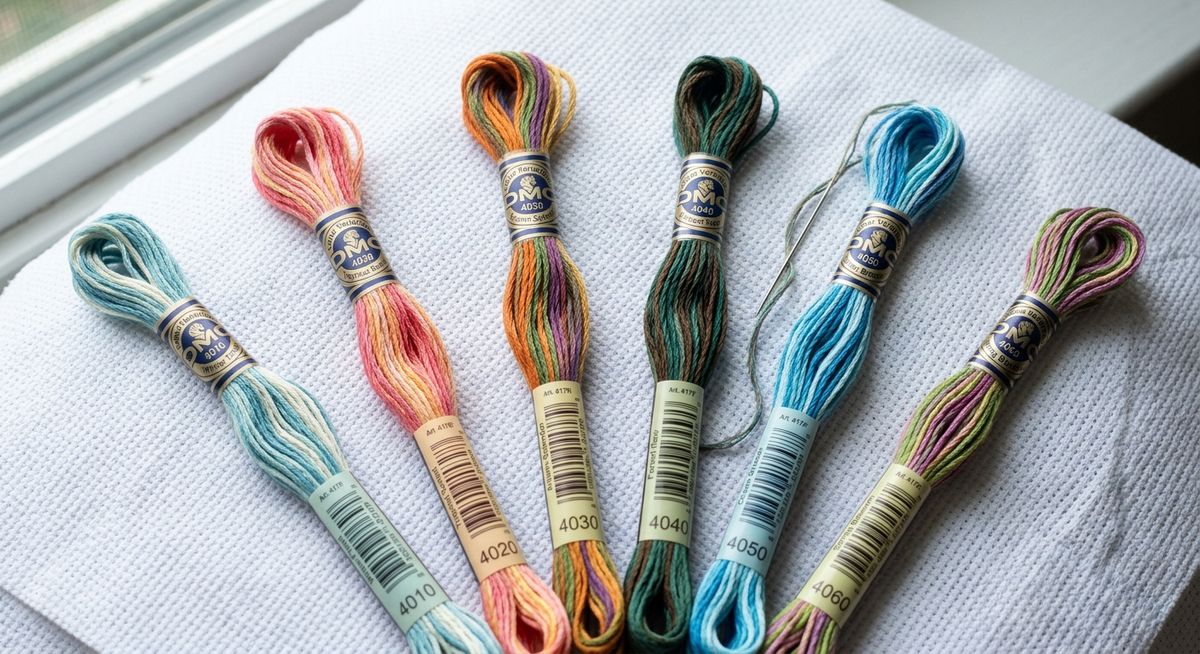
DMC’s Color Variations line — the variegated threads numbered 101 through 124 — occupy a peculiar corner of the cross-stitch world. Stitchers either collect them enthusiastically or avoid them entirely, and both camps have reasonable arguments.
The enthusiasts argue that these threads do something no solid color can: they shift along a gradient within a single strand, creating tonal variation that mimics the way real surfaces — rose petals, autumn leaves, stone walls, aging wood — actually look. The skeptics argue that you lose control over where the color falls, which can produce uneven, patchy results if you don’t understand how variegated threads behave.
Both are right. The difference is technique.
What Are DMC Color Variations?
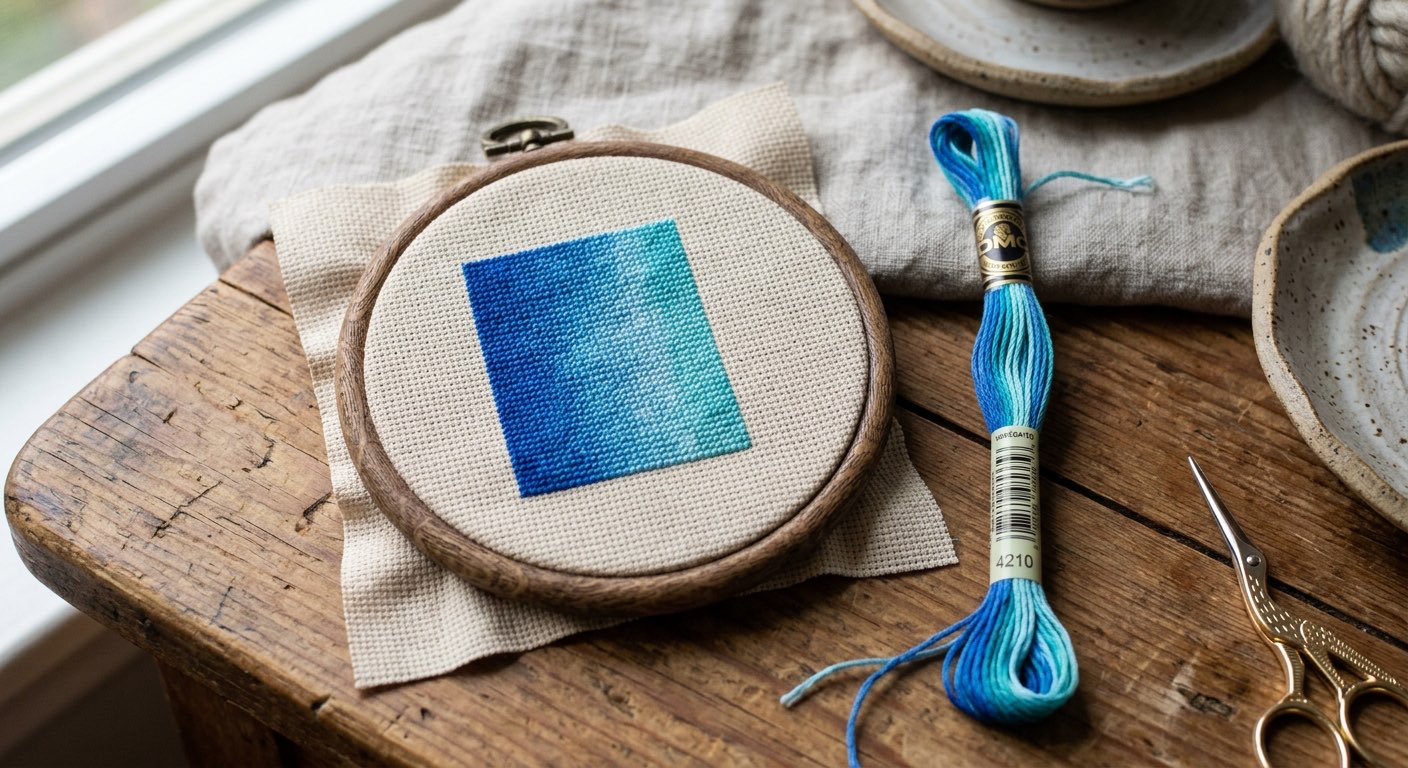
DMC Color Variations threads are six-strand cotton floss, identical in construction to standard DMC solids, that shift gradually through two or more colors along the length of each strand. The color transitions are continuous — no abrupt jumps from one shade to another, but a slow, organic drift from one tone to the next.
The range spans from DMC 101 to DMC 124, giving you 24 threads (some numbers in that range are unused or discontinued; currently around 20 are in active production). Each covers a distinct color territory: muted gray-browns, vivid gemstone tones, dusty florals, autumn warmth, cool aquas and blues.
They’re not the same as DMC Coloris, which is a separate line with slower, more dramatic color shifts over longer lengths. Color Variations shift over shorter intervals, producing finer-grained variation across stitched areas. Nor are they the same as DMC Light Effects, which are specialty metallic and neon threads. Color Variations are plain cotton, working identically to any standard DMC skein.
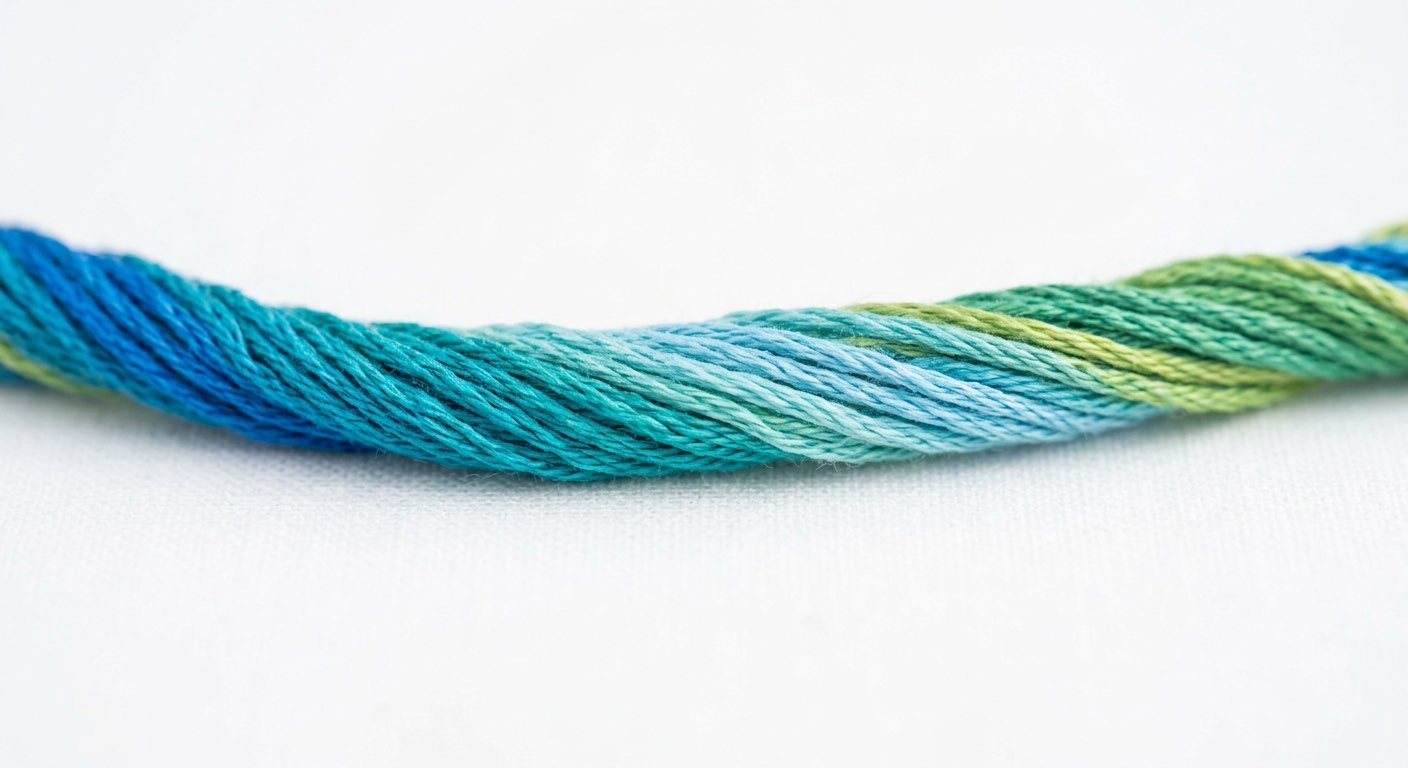
The Full Range: What Each Color Does
Here’s a working guide to the Color Variations line, organized by color family, with the specific page for each color where you can see full conversion data and companion color suggestions.
Browns and Neutrals
DMC 101 — Variegated Gray Brown: A notably restrained variegated thread that drifts between cool stone-gray and warm taupe-brown within a narrow value range. It’s the one to reach for when you want natural-looking texture that reads as organic variation rather than visible color patterning. Stone walls, aged wood, weathered plaster, animal fur with a salt-and-pepper character — this is its territory. The subtlety that makes 101 special also makes it the most versatile thread in the range for backgrounds and large fills.
Purples and Violets
DMC 102 — Variegated Violet: Shifts through medium to deep violet, capturing the depth that purple ranges need but single solid colors struggle to deliver. Pairs with DMC 550 for rich shadow tones.
DMC 103 — Variegated Plum: A cooler, more blue-leaning purple that suits twilight palettes and shadowed floral work.
DMC 104 — Variegated Purple: A broader, more general purple range. Good for violet-themed floral work and backgrounds where you want visible depth.
DMC 105 — Variegated Pink Mauve: Sits in the middle ground between pink and purple — rosewood, dusty mauve, mulberry — in a range that suits Victorian-style florals, thistles, and heather.
Pinks and Roses
DMC 106 — Variegated Carnation: A warm pink that leans more saturated than dusty. Good for vivid floral work where you want a pink that reads bright rather than muted.
DMC 107 — Variegated Dusty Rose: The dusty rose thread: muted, romantic, the color of pressed petals. Where 106 is vivid, 107 is atmospheric. Ideal for cottage-style florals, cherry blossoms, and anything with a soft, faded quality. Pairs beautifully with solid DMC 3354 and DMC 3733 for layered rose palettes.
DMC 108 — Variegated Light Rose: The pale end of the variegated pink range, shifting through light and very light pink tones. Good for backgrounds, large petal areas, and anywhere you want pink without visual weight.
Reds and Garnets
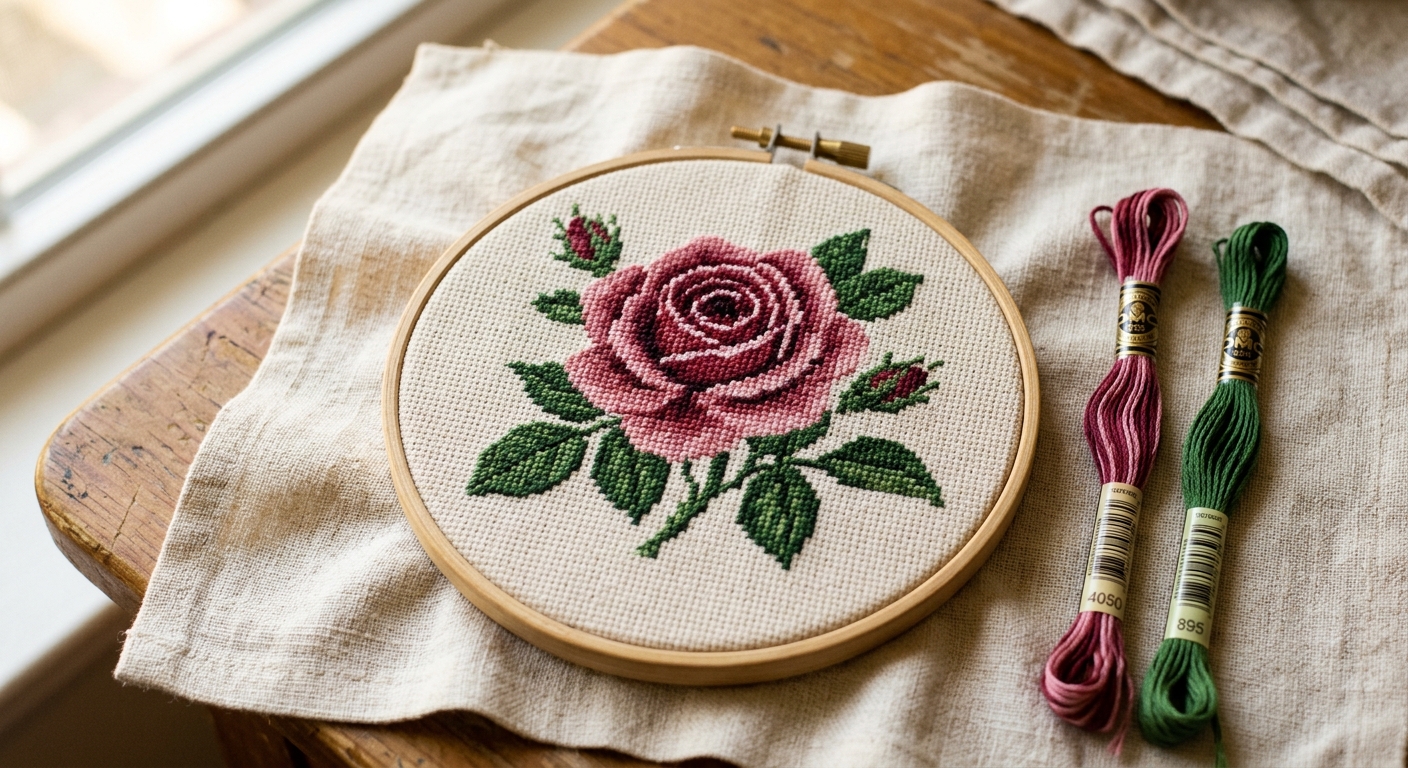
DMC 115 — Variegated Garnet: This is the most discussed thread in the range, possibly because garnet is one of those colors where tonal variation is immediately visible and dramatically effective. DMC 115 shifts from deep wine-burgundy through rich garnet to dusty rose, creating in a single thread what would otherwise require three carefully chosen solids. Rose petal work, redwork with dimension, and autumn foliage at the maple-leaf peak are where it shines. One caveat: the color transitions are visible enough that technique matters more here than with subtler threads — see the technique section below.
Yellows and Golds
DMC 111 — Variegated Mustard: Shifts from medium golden amber to deeper, slightly burnt ochre. The natural home is autumn subjects: sunflower petals, harvest wheat, maple leaves in their golden phase, the sandy coat of a retriever. On cream linen, the lightest parts of the gradient can nearly disappear, giving it a beautiful faded, antique character.
DMC 112 — Variegated Topaz: A brighter, more saturated gold than 111, leaning more citrine-yellow. Good for bright floral work and anywhere you want warm yellow with visible light-to-dark variation.
DMC 113 — Variegated Lemon Yellow: The cool, citrus end of the yellow range. Spring florals, fresh greens, sunlight effects.
DMC 114 — Variegated Goldenrod: Warm and deep, shifting through the goldenrod-to-amber range. Late summer botanical work, bee designs, and folk art motifs.
Blues and Greens
DMC 116 — Variegated Aquamarine: A cool aqua that drifts between blue and green, excellent for water effects, tropical botanical subjects, and anything where you want the blue-green range to feel alive rather than static.
DMC 117 — Variegated Blue: A broad blue range — cornflower to deeper periwinkle — for sky effects, water backgrounds, and blue floral subjects.
DMC 118 — Variegated Deep Blue: Deeper and richer, covering the sapphire-to-navy range. Good for night sky effects, deep water, and rich background fills.
DMC 119 — Variegated Dark Blue: The darkest of the blue variegateds. Very deep navy territory, useful where you want depth without resorting to solid black.
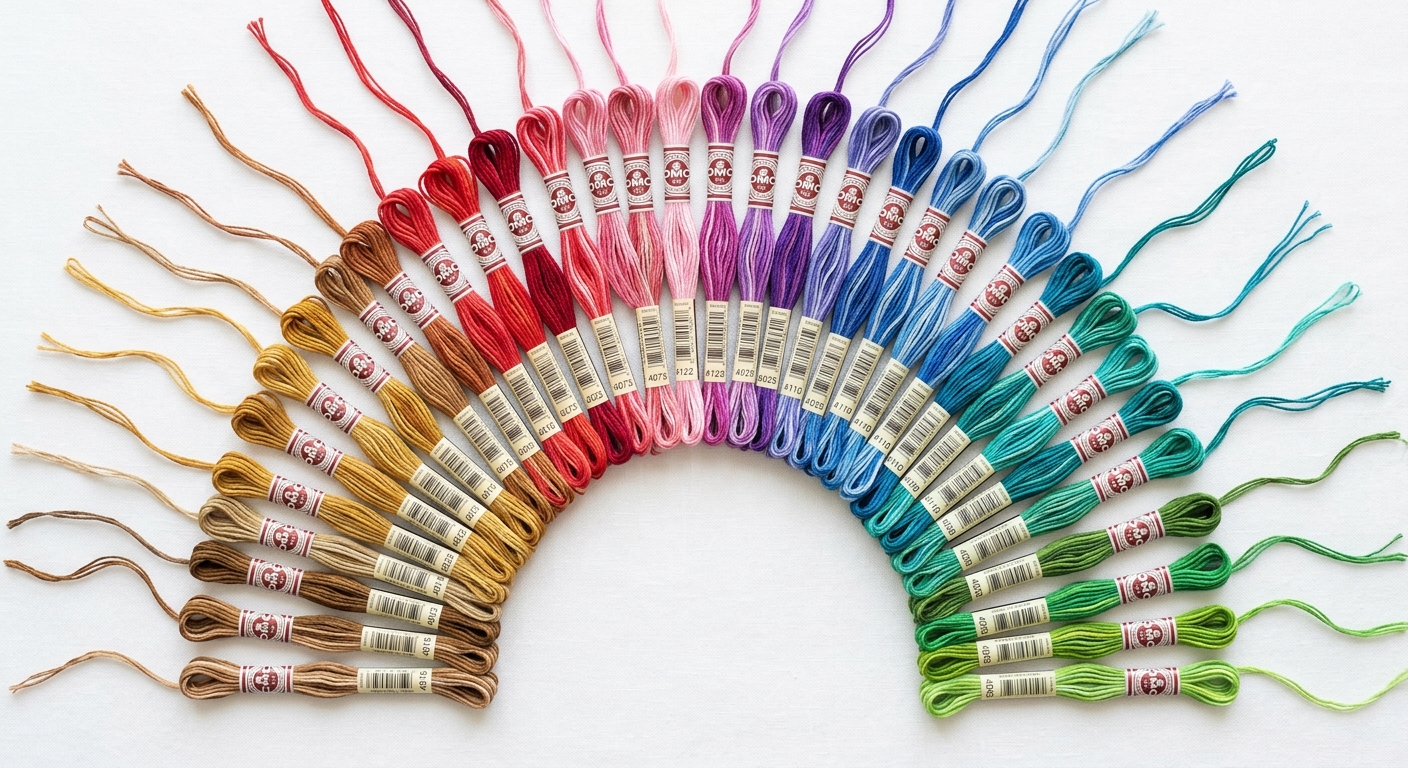
Technique: The Single Biggest Variable
How you stitch with any variegated thread produces noticeably different results. This is not a minor detail — it’s the difference between a piece that looks beautiful and one that looks blotchy.
Danish Method vs. Cross-Country
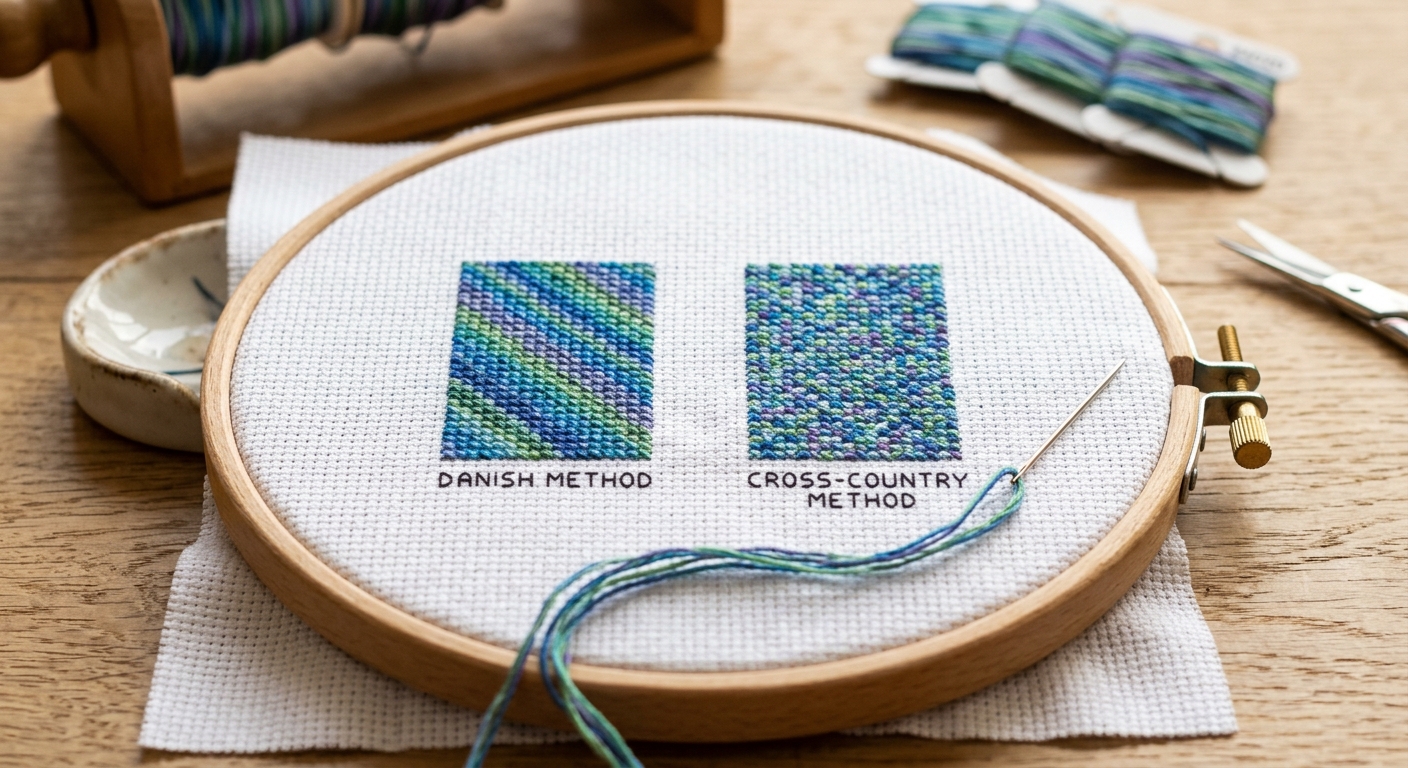
The Danish method (stitch all the bottom half-stitches across a row, then return to complete the tops) creates visible diagonal color streaks, since you’re laying long continuous runs of thread that transition through the gradient. For geometric patterns, borders, or intentional striped effects, Danish method produces a flowing, organized result. For organic subjects like flowers or foliage, the diagonal stripes can look unnatural.
Cross-country (completing each X before moving to the next) creates a more random, scattered color distribution. Each complete stitch captures whatever part of the gradient is on the needle at that moment, with no correlation to adjacent stitches. For natural subjects — rose petals, stone textures, forest floor — this randomness is an asset. It’s the technique that makes variegated threads look like they’re mimicking nature.
A third approach for large fills: color-position control, where you deliberately cut thread lengths that start at a specific point in the gradient cycle, keeping color zones consistent across sections. This takes more time but gives you control over where the light and dark areas fall — essentially using the thread’s natural gradient as a planned design element.
Strand Management
Two strands on 14-count Aida means two strands that may be at different points in their color cycle, which creates a heathered, blended quality within each stitch. A single strand on higher-count fabric (18-count, 28-count evenweave) gives you cleaner color-to-color transitions stitch by stitch, with less blending within each cross.
There’s no correct choice — they produce genuinely different effects. But test before committing to a large fill.
Thread Length
Because variegated threads shift color at regular intervals, the length you cut changes which colors appear in your stitching. Shorter lengths (12–16 inches) give you concentrated color zones. Longer lengths (18–24 inches) produce more gradient coverage per length. For the most consistent result across a large fill area, cut all threads to the same length and start each one from the same position in the skein.
When to Use Color Variations (and When Not To)
Use them for:
Natural subjects with built-in tonal variation. Roses, peonies, autumn leaves, animal fur, stone textures, water — anything that would look flat and unconvincing with a single solid color.
Backgrounds where you want subtle life. A variegated neutral like DMC 101 in a background area prevents the flat, painted-wall look that solid neutrals can produce.
Redwork and monochromatic designs. Substituting a variegated thread in a traditionally single-color design adds dimension without changing the design’s character.
Small to medium fills where you can see the full gradient play out.
Avoid them for:
Geometric patterns requiring precise color zones. If a design has hard color boundaries — a flag, a grid pattern, strong geometric shapes — the unpredictability of where the gradient falls will blur those edges.
Very small motifs (5–10 stitches across). The gradient doesn’t have room to develop, and the result just looks like an odd, muddy color.
Highly saturated palettes. Variegated threads look their best alongside other naturalistic, mid-saturation colors. Placed next to intense solid blocks like DMC 321 Christmas Red or DMC 310 Black, the subtle gradient can look like a mistake rather than a feature.
Pairing Color Variations With Solid DMC
The most effective use of variegated threads is usually in combination with solids. A few patterns that work:
Variegated for fills, solid for outlines. Use 115 Garnet for rose petals, outline and backstitch with solid DMC 815 (Garnet) or DMC 3685 (Very Dark Mauve). The solid defines the shapes; the variegated adds life to the filled areas.
Variegated as the mid-tone, solid as shadow and highlight. Let the thread do the mid-range shading, and use a single darker solid for shadows and a lighter solid for highlights. This approach gives you professional-looking shading from three threads where six or eight solid shades would otherwise be needed.
Transition zones. In a design that moves from warm to cool, a variegated thread that bridges those tones (like DMC 101 bridging warm taupe and cool gray) makes the palette feel unified. Use it where two color families meet.
Buying and Storage
Color Variations threads are available individually or in the occasional assortment. They’re not always stocked at brick-and-mortar stores — the Color Variations line is less common on retail shelves than DMC solids and may need to be ordered. Shop DMC Color Variations thread on Amazon.
Storage note: variegated threads should be labeled clearly before winding onto bobbins. The thread looks different in different lighting conditions, and an unlabeled wound bobbin of a variegated thread is genuinely difficult to identify later — the gradient only shows clearly when you see the full length of a strand, not a compact bobbin of wound thread. Label with the DMC number on the bobbin card.
Conversions for Color Variations
Each thread in the range has approximate equivalents in Anchor, Madeira, Cosmo, and Sullivans — but variegated conversions are genuinely harder to match than solid colors, because the gradient range and transition speed vary between brands.
The individual color pages on this site cover conversion data for each Color Variations thread. When substituting, remember that “close match” for a variegated means the color range overlaps well — the gradient rhythm may still differ. Always stitch a test swatch before committing to a full project with a substituted variegated thread.
For the brown and neutral range, purple and violet range, and red range, the conversion pages include notes on how each brand’s version of the gradient compares to the DMC original.
Are They Worth It?
The cross-stitch community has never fully settled on variegated threads. You’ll find FlossTube stitchers who have built entire projects around Color Variations and stitchers with equal experience and taste who avoid them entirely.
What’s clear: they’re a tool, not a gimmick, and like any tool they perform well when used where they’re suited and poorly when used where they aren’t. A garnet rose stitched with DMC 115 looks richer than the same rose stitched with a single solid red. A geometric sampler stitched with scattered variegated sections can look chaotic in ways the solid version wouldn’t.
The best way to form an opinion is to stitch a test piece. Cut a 10-inch square of 14-count Aida, pick one of the threads from this list, and stitch a small fill area using both cross-country and Danish method on the same piece. You’ll know within an hour whether this is a tool that suits your stitching.
Disclosure: This post contains affiliate links. We may earn a small commission at no cost to you when you purchase through these links. This helps support the site and allows us to continue creating free content.