Easter Cross-Stitch: The DMC Color Palette You Need
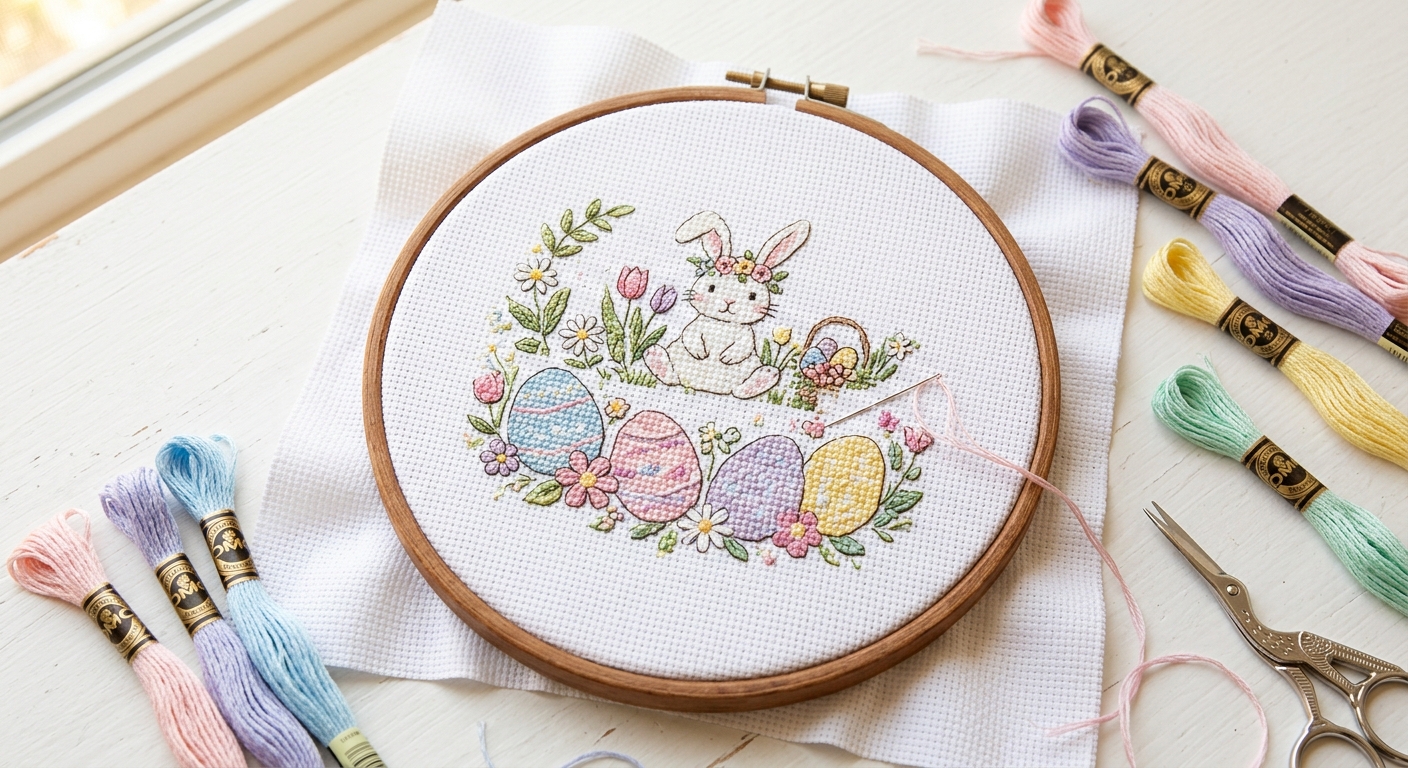
Easter cross-stitch is one of the most satisfying seasonal projects you can take on. The soft pastel palette, the cheerful motifs — eggs, chicks, bunnies, lilies — and the relatively modest project sizes all make Easter pieces perfect for the week or two of lead time you actually have. But picking the right DMC colors makes the difference between pastels that feel fresh and spring-like versus pastels that look muddy or washed out on fabric.
Here’s the complete guide to DMC thread colors for Easter cross-stitch.
The Core Easter Palette: Pastels That Actually Work
Easter is a pastel holiday, and DMC has a deep bench of pale tints. The challenge is that many pastels look nearly identical on the skein. These are the ones that actually photograph well and hold up on white aida:
Pastel egg colors: DMC 3747 (very light blue-violet), 3755 (baby blue), 3753 (ultra light antique blue), 3761 (light sky blue), 3823 (ultra pale yellow), and 3819 (light moss green). These six colors form the classic Easter egg range — cool, clean, and distinct enough to look intentional.
Spring pinks and lavender: DMC 3609, 3608, and 3607 give you a pink-to-magenta graduation. Pair with DMC 211, 210, and 209 for lavender. The combination reads as unmistakably Easter.
Stitching Easter Eggs
Easter egg patterns are forgiving and fast — great for ornaments, gift tags, or practice pieces. The key is using consistent light sources across all eggs in a grouping. Pick your light source (upper left is traditional), and apply the same highlight-midtone-shadow logic to each egg.
For a basic egg, you only need three colors: a pale highlight, a midtone body, and a slightly deeper shadow at the bottom. With the egg palette above, try:
- Blue egg: 3753 (highlight) / 3755 (body) / 3747 (shadow)
- Yellow egg: 3823 (highlight) / 727 (body) / 745 (shadow)
- Pink egg: 3609 (highlight) / 3608 (body) / 3607 (shadow)
- Lavender egg: 211 (highlight) / 210 (body) / 209 (shadow)
Baby Chicks: Simpler Than You Think
Baby chick motifs look complicated but are surprisingly fast to stitch. The entire body uses three yellows: DMC 3078 (very light golden yellow) for the fluffiest highlights, DMC 727 (very light topaz) as the main body color, and DMC 726 (light topaz) for shadow areas and the belly.
For the beak and feet, DMC 3853 (dark autumn gold) reads as orange without being garish. Use DMC 310 (black) for the eye — a single cross-stitch is all you need.
Easter Bunnies: Getting the White Right
White bunnies are a classic Easter motif that trips up a lot of stitchers. The instinct is to use DMC Blanc for the whole body, but that creates a flat, shapeless blob on white or off-white aida. You need shadow colors.
Use this three-value system:
- Lightest areas (top of head, back): DMC Blanc or DMC B5200
- Mid-areas (body, sides): DMC 3865 (winter white) — this is a slightly warm, slightly grey white
- Shadow areas (underside, ear interiors, between legs): DMC 762 (very light pearl grey)
The ear interiors can be stitched with DMC 3713 (very light salmon) or DMC 3716 (very light dusty rose) for a pink inner ear detail that looks realistic and charming.
Easter Lilies
The Easter lily is technically one of the more challenging florals — the trumpeted shape requires careful shading — but the color palette is simple. You need:
- Petals: DMC Blanc and DMC 3865, with DMC 762 for the deepest petal shadows
- Center throat: DMC 3078 (very light golden yellow) for the warm yellow glow
- Stamens: DMC 726 for the filaments, DMC 3820 (dark straw) for the pollen-dusted anthers
- Stems and leaves: DMC 166 (light moss green) and DMC 164 (light forest green)
The lily’s distinctiveness comes from that yellow-to-white gradient at the trumpet opening. Don’t skip it — it’s what makes the flower recognizable.
Spring Greens for Backgrounds and Borders
Easter pieces often include grass, leaves, or spring foliage. The DMC greens that read as fresh and spring-like (rather than summery or autumnal) are in the yellow-green range:
- DMC 164 (light forest green) — fresh but not too bright
- DMC 166 (light moss green) — the springtime grass color
- DMC 472 (ultra light avocado green) — very pale, works as a grass highlight
- DMC 471 (very light avocado green) — a step deeper, good for mid-grass
- DMC 3348 (light yellow-green) — the lightest spring leaf, use for highlights
- DMC 3347 (medium yellow-green) — a good all-purpose spring foliage
Putting It Together: Full Palette Reference
For a full Easter scene or sampler, here’s the complete working palette:
| Purpose | DMC Numbers |
|---|---|
| Pastel egg blues | 3747, 3755, 3753, 3761 |
| Pastel egg yellows | 3823, 3819, 727 |
| Pastel pinks | 3609, 3608, 3607 |
| Lavender | 211, 210, 209 |
| Chick yellows | 3078, 727, 726 |
| Bunny whites | Blanc, 3865, 762 |
| Pink inner ears | 3716, 3713 |
| Lily petals | Blanc, 3865, 762 |
| Spring greens | 164, 166, 472, 471, 3348, 3347 |
| Outlines | 310 (black), 935 (dark avocado green) |
Final Tips
Work on white or off-white aida (18-count works well for small Easter motifs, 14-count for larger pieces). The pale pastels in this palette will disappear on natural linen or colored fabric.
If you’re making Easter gifts and short on time, a single motif — one large egg, one chick, one lily spray — matted in a small frame makes a thoughtful and fast-to-finish present.
Browse the Easter palette on Stitchies to see all the DMC color swatches with conversions to Anchor, Madeira, and other brands.
Disclosure: This post contains affiliate links. We may earn a small commission at no cost to you when you purchase through these links. This helps support the site and allows us to continue creating free content.