
DMC 123 — Variegated Robin Red Breast
Reds family · Hex #B03040
Quick Conversion Table
| Brand | Equivalent | Match |
|---|---|---|
| Anchor | 13 | close |
| Madeira | 0211 | close |
| Cosmo ⚠ | 2593 | close |
| Sullivans | 45115 | close |
A Thread Named for a Bird
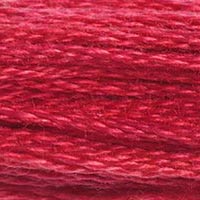
Most DMC thread names are straightforward — Medium Red, Dark Coral, Light Salmon. Then there is DMC 123, Variegated Robin Red Breast, a name that tells you exactly what this thread was made to stitch. The European robin (Erithacus rubecula) sports a breast that is not truly red at all but a warm, shifting orange-red that grades into brown at the edges and pales toward the belly. DMC 123 captures that living quality: a variegated thread that transitions through warm red, rosy crimson, and softer berry tones in a continuous, gradual cycle.
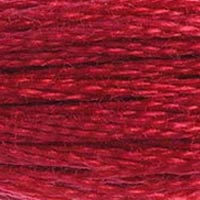
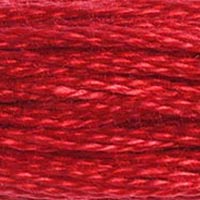
The base hex (#B03040) lands in the deep rose-red zone, warmer and more saturated than its cousin DMC 115 (Variegated Garnet). Where 115 leans toward wine and mauve, 123 stays firmly in the warm red camp — think cranberry sauce catching kitchen light, or the specific red of pomegranate seeds held up to a window. The transitions in this thread move from a medium red through a slightly darker crimson and back, without ever straying into pink or purple territory. It stays warm throughout its cycle, which makes it more versatile than variegated threads with wider color swings.
That tighter color range is actually 123's secret advantage. Variegated threads with dramatic shifts — light to dark, warm to cool — can look chaotic in small motifs. DMC 123's subtle variations read as natural shading rather than as obvious color changes, which means it works in contexts where a more dramatic variegated thread would look gimmicky. A small heart motif stitched entirely in 123 looks like it has been expertly shaded; the same heart in a wider-ranging variegated thread looks tie-dyed.
The Robin Connection: Wildlife Cross-Stitch
Bird cross-stitch patterns are perennially popular, and getting the breast color right on a European robin is a surprisingly common challenge. The real bird's breast is not the fire-engine red of DMC 666 or the pure crimson of DMC 321 — it is a softer, warmer, more complex red-orange that shifts across the feathered surface as light hits different angles. Using solid DMC colors, you would need to blend at least three shades — perhaps DMC 350 (Medium Coral), DMC 817 (Very Dark Coral Red), and DMC 356 (Medium Terra Cotta) — to approximate what 123 does in a single thread.
For American robin patterns, 123 works differently. The American robin's breast is more orange than the European species, so 123 serves better as the shadow tone under the breast, where the warm red transitions to the darker flanks, rather than as the primary breast color. Pair it with DMC 921 (Copper) or DMC 922 (Light Copper) for the lighter breast areas, and DMC 3371 (Black Brown) for the head and back.
Beyond robins, 123 earns its place in any avian project involving warm red plumage. Cardinals, tanagers, and red-winged blackbird shoulder patches all benefit from the subtle color movement. The thread's variegation mimics the way individual feathers overlap and catch light at slightly different angles, creating the micro-shading that makes stitched birds look dimensional rather than flat.
Stitching Techniques for Tight-Range Variegation
Because 123's color changes are relatively subtle, your stitching method affects the result less dramatically than with high-contrast variegated threads. The Danish method and the English method produce visibly similar results — the individual stitch color mixing that happens with Danish stitching is less noticeable when the two halves of the stitch are only a shade apart. This means you can choose your stitching method based on comfort and efficiency rather than on managing the variegation effect.
Where technique does matter is in thread length management. Cutting shorter lengths (about 15 inches rather than the typical 18) from the skein ensures you use a smaller segment of the color cycle in each area, which can help maintain color consistency within a specific region of your design. If you are stitching a robin's breast and want the color shifts to follow the bird's anatomy rather than appearing random, shorter lengths give you more control over placement.
For backstitching with 123 — and it works beautifully in backstitch — use a single strand and let the color shifts flow along the line. Redwork-style designs stitched entirely in 123 backstitch have a warmth and depth that single-color redwork cannot match. The continuous nature of backstitch allows the variegation to read as gradual shading along curves and contours, which is exactly how light falls across three-dimensional forms.
Thread behavior is standard DMC quality. Separation is clean, the twist holds well, and coverage on 14-count with two strands is complete. The mechanical properties are identical to any solid DMC cotton — only the visual properties change.
Finding Alternatives for a Uniquely Named Thread
Anchor 13 is rated as a close match, but matching variegated threads across brands is always approximate at best. The specific color transition pattern — the rate of change, the exact shade endpoints, the proportion of dark to light within each cycle — varies between manufacturers even when the average color is similar. Anchor 13 will give you a warm red variegated effect, but the specific character of the transitions may differ from DMC 123's tight, subtle range.
Madeira 0211 offers another close match. Madeira's variegated cotton tends toward slightly longer transition cycles than DMC's, which means the color shifts are even more gradual. For wildlife subjects where you want the most natural-looking variation, this can actually be an improvement over the DMC original — longer transitions mimic the way real feather colors grade more realistically.
Cosmo 2593 provides a close match with Cosmo's distinctive soft texture. The hand of Cosmo thread differs noticeably from DMC — it is silkier and slightly less tightly twisted — which means the finished stitches will have a different surface quality even if the color is equivalent. For decorative pieces where texture contributes to the overall effect, this difference is worth considering as a feature rather than a drawback.
If you cannot find a variegated substitute, build the effect manually. Thread a blended needle with one strand of DMC 304 (Medium Red) and one strand of DMC 3858 (Medium Rosewood). This gives you the warm red base with enough variation between the two strands to create visual interest within each stitch. Alternatively, DMC 3328 (Dark Salmon) used alone captures the warm, muted red quality of 123's midtone without the variegation — a simpler thread that gets you into the same general neighborhood.
Reference quality
How We Validate This Color Record
Use this page as a reference card for DMC 123: the structured data, quick conversions, and long-form copy are all tied back to the same stored color record.
- Methodology
- This page renders DMC 123, its hex value, and every brand equivalent from the site's source-of-truth color record, then checks long-form body copy against those same stored fields.
- Verification status
- Source-field checked. The page content is audited against the stored DMC number, brand equivalents, and match-quality labels before publishing.
- Last reviewed
- 2026-04-20
- Approximation warning
- Screen hex values, thread photos, and cross-brand conversions are reference aids. Dye lots, thread sheen, and fabric color can still shift the result in hand.
Decision guide
When to use the DMC 123 reference page
This page should help you decide faster between palette planning, brand substitution, and shade comparison without turning the color record into a thin lookup page.
Best for
- + Palette planning when you want the stored DMC 123 Variegated Robin Red Breast record, hex value #B03040, and linked brand equivalents in one place.
- + Checking the quickest cross-brand shortlist before you buy floss, compare stash substitutes, or route into a more specific conversion page.
- + Finding nearby shades in the reds family before you commit to accents, shading, or background blends.
Watch for
- ! Screen previews are only reference aids. Variegated Robin Red Breast can shift on real fabric because thread sheen, stitch coverage, and room lighting change how the color reads.
- ! A stored equivalent is still a shortlist, not a guarantee that two brands will disappear into each other in the same stitched motif.
- ! Older charts, discontinued kit floss, and dye-lot variation can all introduce small but visible differences that the page cannot detect for you.
Before you commit
- Confirm the role of DMC 123 Variegated Robin Red Breast: decide whether you need an exact hero shade, a forgiving background, or a rough stash substitute.
- Compare on project fabric: view the skein or stitched sample on the same fabric count and color you will actually use.
- Use the linked conversion pages next: open the brand-specific pages when you need match-quality caveats before substituting away from the DMC reference.
DMC 123 FAQ
These questions appear on the page so the FAQ schema stays aligned with what visitors can actually read.
What is the Anchor equivalent of DMC 123?+
The closest Anchor equivalent to DMC 123 (Variegated Robin Red Breast) is Anchor 13. This is a close match.
What color is DMC 123?+
DMC 123 is called "Variegated Robin Red Breast" and has a hex color value of #B03040. It belongs to the reds color family.
What is the Madeira equivalent of DMC 123?+
The closest Madeira equivalent to DMC 123 (Variegated Robin Red Breast) is Madeira 0211. This is a close match.
How DMC 123 Looks on Fabric
The same thread appears different depending on your fabric. Always test on your project fabric.
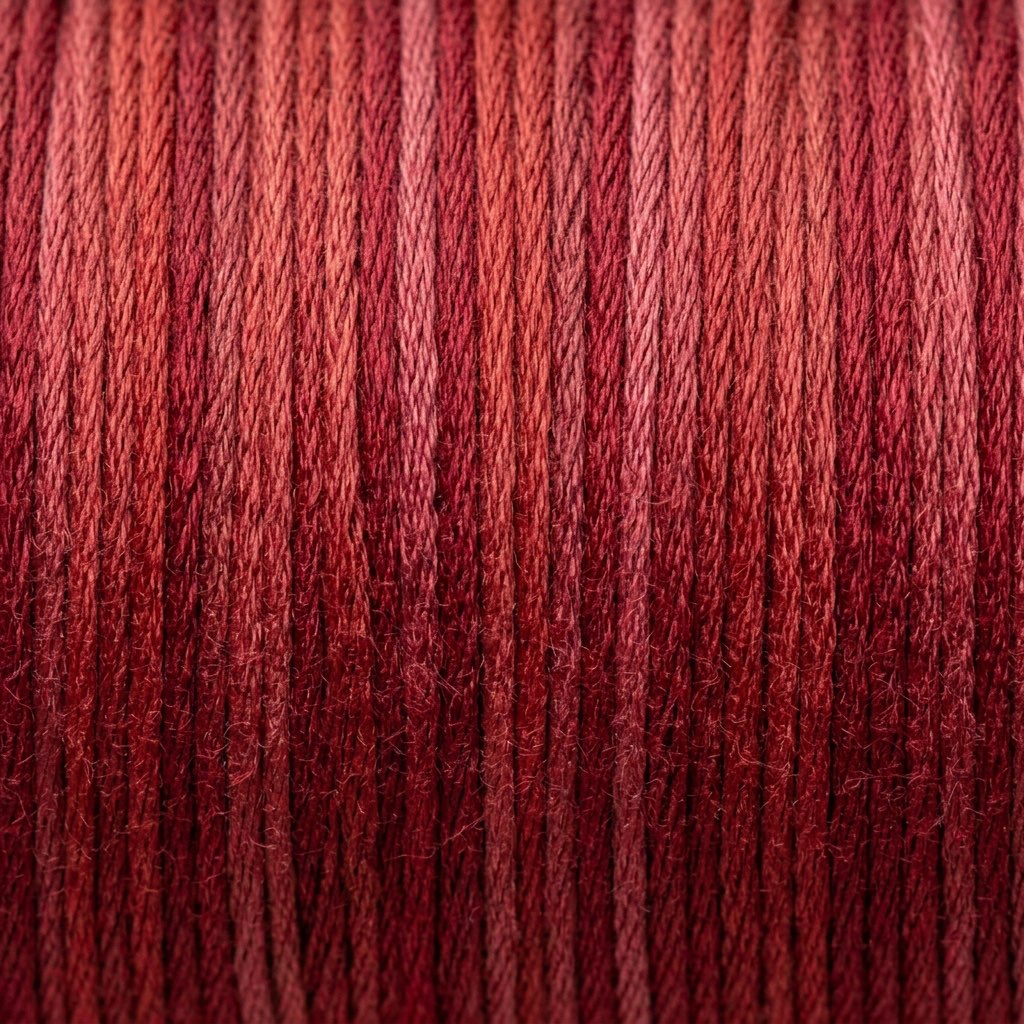
White Aida
Cream / Ecru
Black Aida
Pairs Well With
DMC colors commonly used alongside 123 Variegated Robin Red Breast.
Suggested Palette
Shading Companions
Detailed Conversions
Where to Buy DMC 123
This section contains affiliate links. We may earn a small commission at no cost to you.
Related Guides
Free Printable Thread Conversion Chart
Pick a brand and download a printable chart mapping all 552 DMC colors to that brand's closest equivalents. Free — no signup needed.
Opens in a new tab. Use your browser's Print → Save as PDF.