
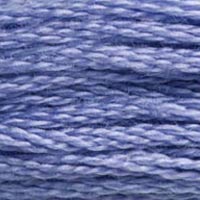
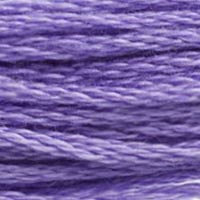
DMC 156 — Medium Light Blue Violet
Purples family · Hex #A3AED1
Quick Conversion Table
| Brand | Equivalent | Match |
|---|---|---|
| Anchor | 118 | close |
| Madeira | 0911 | close |
| Cosmo ⚠ | 148 | close |
| Sullivans | 45471 | close |
| J&P Coats | 7110 | close |
The Periwinkle Problem, Solved
Every stitcher who has tried to render periwinkle flowers, morning glories, or cornflowers in cross stitch has faced the same frustrating question: is this color blue or purple? Pattern charts often list these flowers as blue, but your eye sees purple. Color cards say violet, but the thread in your hand looks lavender-blue. DMC 156 Medium Light Blue Violet sits precisely at the resolution point of this argument. At #A3AED1, it is a medium-light, slightly grayed blue-violet that reads as periwinkle — not firmly blue, not firmly purple, but that particular color where the two families merge into something distinct.
The grayed quality is important. Pure blue-violet at this value would be vivid and assertive, but 156 carries enough gray to soften it into something gentler, more approachable. It is the color of distance — far-away mountains at the edge of a landscape, the middle value of a watercolor wash, the sky reflected in still water after sunset. That atmospheric quality makes 156 enormously useful for background work, sky areas, water surfaces, and any situation where you need color that sets a mood without dominating the composition.
Photographing the Unphotographable
Let's address something practical that affects every stitcher who posts their work online: DMC 156 is one of the hardest colors in the range to photograph accurately. The blue-violet range sits at a point in the visible spectrum where digital camera sensors struggle, and 156's relatively light value compounds the problem. Photographs tend to push it either toward blue (losing the purple character) or toward a more saturated violet (losing the grayish softness that defines the thread in person). Fluorescent lighting makes it look distinctly blue. Incandescent light pushes it warm and almost lavender.
If you need accurate photos of a finished piece using 156, shoot in natural diffused daylight — an overcast day or a north-facing window provides the most neutral light. Avoid auto white balance, which will typically correct the blue-violet cast right out of the image. If your camera allows manual white balance, setting it for daylight will give the most faithful rendering.
Using 156 in Gradient Work and Ombre Effects
DMC 156 is the third step in the four-shade blue-violet gradient: DMC 3746 (Dark Blue Violet) at the deep end, DMC 155 (Medium Blue Violet) in the middle, 156 as the light-medium step, and DMC 3747 (Very Light Blue Violet) at the lightest end. This gradient is one of DMC's most elegant sequences — each step is distinct but the transitions feel natural, with no awkward jumps in value or hue.
For ombre effects, this gradient works beautifully across a band sampler or geometric border pattern. Start each row or section with 3746 at the top, step to 155, then 156, and finish with 3747. The cool temperature remains consistent throughout, so the eye reads the gradient as a single color in shifting light rather than as four different colors. This is one of the advantages of working within a well-designed color family — the undertone consistency makes gradients look intentional and sophisticated rather than patchy.
In larger landscape pieces, 156 excels as a distance color. Distant mountains, far-off treelines, and deep background elements in landscape painting often shift toward blue-violet as atmospheric haze desaturates and cools the colors. Stitching distant elements in 156 creates convincing aerial perspective — the visual phenomenon where distant objects appear lighter, bluer, and less distinct than near objects. Pair with closer foreground elements in warmer, more saturated colors and the sense of depth becomes remarkably convincing for a medium built on tiny X-shaped marks.
Finding the Right Periwinkle Stand-In
Anchor 118 is a close match, though Anchor's version can lean slightly more blue than DMC's, which shifts the thread further from purple territory and closer to a true light blue. For designs where 156 is used alongside other purples, this blue shift might create a noticeable break in the family relationship. For designs where 156 stands alone as a periwinkle or cornflower color, the slight difference is unlikely to matter.
Madeira 0911 is a close match with the typical Madeira sheen. At this light value, the extra sheen is quite visible and can give the thread a slightly more luminous quality — useful for water or sky areas where you want a sense of light, potentially distracting for flat fill areas where you want even coverage. Cosmo 148 offers a close match with softer twist and smoother lay, producing a flatter stitch surface that some stitchers prefer for geometric and sampler work.
Sullivans 45471 is close. Sullivans coverage at medium-light values is generally comparable to DMC, though the thread may require slightly more attention to tension to achieve the same even surface finish.
Within DMC, the closest alternative is DMC 341 (Light Blue Violet). These two threads are close enough in value and hue to be near-interchangeable in many contexts, though 156 carries slightly more gray and reads as softer than 341's comparatively cleaner blue-violet. If your design uses 156 as part of the 3746-155-156-3747 gradient family, substituting 341 may create a visible inconsistency in the gradient. If 156 is used independently as a periwinkle or background color, 341 is a perfectly reasonable swap.
Reference quality
How We Validate This Color Record
Use this page as a reference card for DMC 156: the structured data, quick conversions, and long-form copy are all tied back to the same stored color record.
- Methodology
- This page renders DMC 156, its hex value, and every brand equivalent from the site's source-of-truth color record, then checks long-form body copy against those same stored fields.
- Verification status
- Source-field checked. The page content is audited against the stored DMC number, brand equivalents, and match-quality labels before publishing.
- Last reviewed
- 2026-04-20
- Approximation warning
- Screen hex values, thread photos, and cross-brand conversions are reference aids. Dye lots, thread sheen, and fabric color can still shift the result in hand.
Decision guide
When to use the DMC 156 reference page
This page should help you decide faster between palette planning, brand substitution, and shade comparison without turning the color record into a thin lookup page.
Best for
- + Palette planning when you want the stored DMC 156 Medium Light Blue Violet record, hex value #A3AED1, and linked brand equivalents in one place.
- + Checking the quickest cross-brand shortlist before you buy floss, compare stash substitutes, or route into a more specific conversion page.
- + Finding nearby shades in the purples family before you commit to accents, shading, or background blends.
Watch for
- ! Screen previews are only reference aids. Medium Light Blue Violet can shift on real fabric because thread sheen, stitch coverage, and room lighting change how the color reads.
- ! A stored equivalent is still a shortlist, not a guarantee that two brands will disappear into each other in the same stitched motif.
- ! Older charts, discontinued kit floss, and dye-lot variation can all introduce small but visible differences that the page cannot detect for you.
Before you commit
- Confirm the role of DMC 156 Medium Light Blue Violet: decide whether you need an exact hero shade, a forgiving background, or a rough stash substitute.
- Compare on project fabric: view the skein or stitched sample on the same fabric count and color you will actually use.
- Use the linked conversion pages next: open the brand-specific pages when you need match-quality caveats before substituting away from the DMC reference.
DMC 156 FAQ
These questions appear on the page so the FAQ schema stays aligned with what visitors can actually read.
What is the Anchor equivalent of DMC 156?+
The closest Anchor equivalent to DMC 156 (Medium Light Blue Violet) is Anchor 118. This is a close match.
What color is DMC 156?+
DMC 156 is called "Medium Light Blue Violet" and has a hex color value of #A3AED1. It belongs to the purples color family.
What is the Madeira equivalent of DMC 156?+
The closest Madeira equivalent to DMC 156 (Medium Light Blue Violet) is Madeira 0911. This is a close match.
How DMC 156 Looks on Fabric
The same thread appears different depending on your fabric. Always test on your project fabric.
White Aida
Cream / Ecru
Black Aida
Pairs Well With
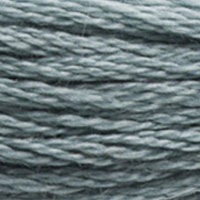
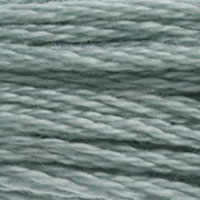
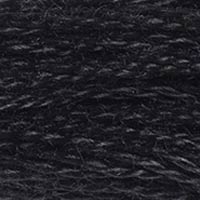
DMC colors commonly used alongside 156 Medium Light Blue Violet.
Suggested Palette
Detailed Conversions
Where to Buy DMC 156
This section contains affiliate links. We may earn a small commission at no cost to you.
Related Guides
Free Printable Thread Conversion Chart
Pick a brand and download a printable chart mapping all 552 DMC colors to that brand's closest equivalents. Free — no signup needed.
Opens in a new tab. Use your browser's Print → Save as PDF.