
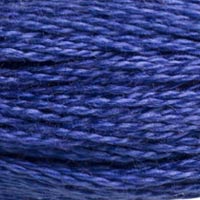
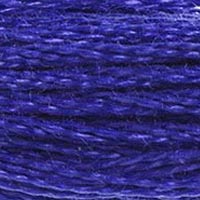
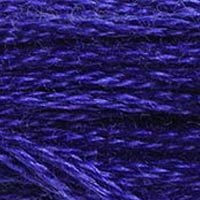
DMC 158 — Medium Very Dark Cornflower Blue
Blues family · Hex #4C526E
Quick Conversion Table
| Brand | Equivalent | Match |
|---|---|---|
| Anchor | 178 | close |
| Madeira | 2702 | close |
| Cosmo ⚠ | 150 | close |
| Sullivans | 45473 | close |
| J&P Coats | 7024 | close |
| Dimensions | 17150 | close |
Denim's Older, More Sophisticated Cousin
You know that pair of jeans you've had for three years — not the new indigo-dark ones, not the faded-to-nothing weekend pair, but the ones that have worn into exactly the right shade of lived-in blue? DMC 158 is that shade, translated into floss. Medium Very Dark Cornflower Blue is an admittedly unwieldy name for what is, in practice, a gorgeously versatile medium-dark blue with enough grey and violet in its undertones to avoid looking primary or juvenile.
This is a thread that reads differently depending on what surrounds it. Next to bright whites and yellows, 158 feels darkish and serious — a dependable denim weight. Next to navy and black, it lightens up and takes on an almost periwinkle quality. This chameleon nature makes it disproportionately useful in palettes, because it can serve as either a shadow or a highlight depending on its neighbors. Few colors can honestly claim that range.
The Workhorse Mid-Tone
Every color family needs a workhorse — the mid-value shade that does the most work in the most patterns without drawing attention to itself. In the cornflower family, that's 158. DMC 157 (Very Light Cornflower Blue) is too pale to carry structural weight. DMC 3807 (Cornflower Blue) is saturated enough to make a statement. Thread 158 sits between them, doing the quiet work of filling, shading, and connecting without calling attention to itself.
In practice, this means 158 shows up constantly in floral patterns, particularly in designs that feature blue flowers with realistic shading. It's the mid-tone of a bluebell, the shadow side of a hydrangea floret, the deeper petals of a cornflower where they overlap and block light. It builds the form of the flower — the three-dimensional illusion that separates a well-shaded floral from a flat, clipart-looking one.
Landscape designs use 158 for mid-distance features. The mountains you can still see as mountains (not just hazy shapes like the far background) but that are clearly miles away — the ones with form but not detail. Distant tree lines at dusk. Storm clouds with substance. The surface of a lake that reflects an overcast sky. In all these applications, 158 provides visual weight without the finality of a darker shade.
Blue in Uniform: Military and Maritime Connections
Military uniform history is essentially a history of blues, and 158 falls in the range historically associated with Union Army dress uniforms during the American Civil War. That specific medium-dark blue — not the near-black of formal navy, not the bright blue of parade dress, but a practical, dirt-hiding, weather-enduring working blue — was chosen precisely because it wore well and maintained its dignity through hard use. Cross-stitch patterns depicting Civil War scenes, historical military portraits, or reenactment-themed samplers frequently call for a blue in this exact range.
For stitchers working on military heritage projects, 158 pairs well with DMC 3750 (Very Dark Antique Blue) for the darkest uniform shadows, DMC 160 (Medium Gray Blue) for areas catching light, and DMC 3021 (Very Dark Brown Grey) for the weathered, field-worn look that distinguishes campaign uniforms from parade ground finery. Add DMC 3787 (Dark Brown Grey) for buttons, belt hardware, and leather details, and you've built an authentic palette from a handful of threads.
The grey component in 158 is key to its historical accuracy. Real military blues weren't pure blue — they were muted by the natural dyes and woolen fabrics of the era, grayed by exposure to sun and weather, and tempered by the practical considerations of cloth that had to endure marching, camping, and combat. A bright, clean blue would look wrong in this context. DMC 158 looks right because it carries that same muted, experienced quality.
Matching the Grey-Violet Character of 158
Anchor 178 is your closest option and it respects the muted quality that defines 158 — not too bright, not too dark, with that essential grey-violet undertone. It's the substitute to reach for when 158 is used in shading sequences or alongside other cornflower blues.
Madeira 2702 performs well in this slot too. The slight difference in thread twist between DMC and Madeira can actually work in your favor at this value — Madeira's smoother lay can enhance the grey undertone on fabrics where DMC's texture catches light differently. Cosmo 150 is a reasonable match, though some stitchers report it reading very slightly warmer. Sullivans 45473 gets the job done for basic applications.
The danger zone for substitution lies in reaching for a blue that looks similar in the skein but lacks the grey muting. DMC 798 (Dark Delft Blue), for instance, shares a similar value but runs cleaner and bluer — it lacks 158's dusty sophistication. In a palette designed around muted, historically-inspired blues, that difference stands out immediately. Similarly, DMC 3839 (Medium Lavender Blue) is close in value but leans harder into violet, potentially shifting a military palette toward something unexpectedly floral.
If you're stitching a cornflower shading progression (157, 158, 3807), match all three from the same brand if possible. The visual relationship between values matters more than any single thread's color accuracy. A set of three Anchor threads that shade properly will look better than mixing brands and hoping the steps align.
Reference quality
How We Validate This Color Record
Use this page as a reference card for DMC 158: the structured data, quick conversions, and long-form copy are all tied back to the same stored color record.
- Methodology
- This page renders DMC 158, its hex value, and every brand equivalent from the site's source-of-truth color record, then checks long-form body copy against those same stored fields.
- Verification status
- Source-field checked. The page content is audited against the stored DMC number, brand equivalents, and match-quality labels before publishing.
- Last reviewed
- 2026-04-20
- Approximation warning
- Screen hex values, thread photos, and cross-brand conversions are reference aids. Dye lots, thread sheen, and fabric color can still shift the result in hand.
Decision guide
When to use the DMC 158 reference page
This page should help you decide faster between palette planning, brand substitution, and shade comparison without turning the color record into a thin lookup page.
Best for
- + Palette planning when you want the stored DMC 158 Medium Very Dark Cornflower Blue record, hex value #4C526E, and linked brand equivalents in one place.
- + Checking the quickest cross-brand shortlist before you buy floss, compare stash substitutes, or route into a more specific conversion page.
- + Finding nearby shades in the blues family before you commit to accents, shading, or background blends.
Watch for
- ! Screen previews are only reference aids. Medium Very Dark Cornflower Blue can shift on real fabric because thread sheen, stitch coverage, and room lighting change how the color reads.
- ! A stored equivalent is still a shortlist, not a guarantee that two brands will disappear into each other in the same stitched motif.
- ! Older charts, discontinued kit floss, and dye-lot variation can all introduce small but visible differences that the page cannot detect for you.
Before you commit
- Confirm the role of DMC 158 Medium Very Dark Cornflower Blue: decide whether you need an exact hero shade, a forgiving background, or a rough stash substitute.
- Compare on project fabric: view the skein or stitched sample on the same fabric count and color you will actually use.
- Use the linked conversion pages next: open the brand-specific pages when you need match-quality caveats before substituting away from the DMC reference.
DMC 158 FAQ
These questions appear on the page so the FAQ schema stays aligned with what visitors can actually read.
What is the Anchor equivalent of DMC 158?+
The closest Anchor equivalent to DMC 158 (Medium Very Dark Cornflower Blue) is Anchor 178. This is a close match.
What color is DMC 158?+
DMC 158 is called "Medium Very Dark Cornflower Blue" and has a hex color value of #4C526E. It belongs to the blues color family.
What is the Madeira equivalent of DMC 158?+
The closest Madeira equivalent to DMC 158 (Medium Very Dark Cornflower Blue) is Madeira 2702. This is a close match.
How DMC 158 Looks on Fabric
The same thread appears different depending on your fabric. Always test on your project fabric.
White Aida
Cream / Ecru
Black Aida
Pairs Well With
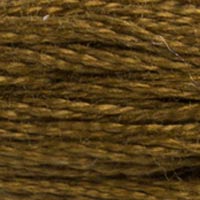
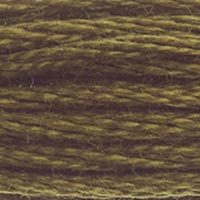
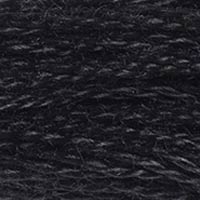
DMC colors commonly used alongside 158 Medium Very Dark Cornflower Blue.
Suggested Palette
Shading Companions

Detailed Conversions
Where to Buy DMC 158
This section contains affiliate links. We may earn a small commission at no cost to you.
Related Guides
Free Printable Thread Conversion Chart
Pick a brand and download a printable chart mapping all 552 DMC colors to that brand's closest equivalents. Free — no signup needed.
Opens in a new tab. Use your browser's Print → Save as PDF.