
DMC 3031 — Very Dark Mocha Brown
Browns family · Hex #4B3C2A
Quick Conversion Table
| Brand | Equivalent | Match |
|---|---|---|
| Anchor | 905 | close |
| Madeira | 2003 | close |
| Cosmo ⚠ | 312 | close |
| Sullivans | 45323 | close |
| J&P Coats | 5472 | close |
| Dimensions | 15472 | close |
Dark Roast: The Espresso of the Brown Family
Every coffee drinker has their darkness threshold — the point where roast depth crosses from "rich" to "too much." DMC 3031 sits right at that line. Very Dark Mocha Brown is the espresso crema of the DMC range: deep, concentrated, complex, with a warmth that pure dark threads can't match. It's darker than most stitchers expect a brown to be, darker than it looks on the color card, and darker than you think it should be until you put it on fabric next to a mid-tone brown and watch it create shadows that look real.
Pull a length from the skein and you might mistake it for black. Hold it next to DMC 310 and the difference becomes obvious — 3031 has a warm, chocolate-brown undertone that 310 completely lacks. That warmth is the entire point. When you need a near-black that still belongs to the brown family, that still relates to the earth tones above it in your gradient, 3031 is the thread that bridges darkness and warmth. It's the shadow under the coffee table, not the absence of light.
In the mocha brown family, 3031 anchors the absolute dark end: 3031 (Very Dark), 3781 (Dark), 3032 (Medium), 3782 (Light), 3033 (Very Light), and 3866 (Ultra Very Light) create one of the longest continuous gradients in the DMC system. Six threads spanning from near-black to near-white, all sharing the same warm, slightly grayed mocha character. It's a portrait photographer's gray card translated into thread — a complete tonal range with consistent color temperature throughout.
The Invisible Essential in Full-Coverage Work
Full-coverage cross-stitch pieces — those ambitious, often years-long projects where every square of fabric gets stitched — consume dark browns the way rivers consume snowmelt. They disappear into the work. You buy skein after skein, wondering where it all goes, because 3031 is the thread that makes every other color look good without drawing attention to itself. It's the background shadow behind a face, the deep fold in a draped fabric, the underpainting that gives a landscape its three-dimensionality.
This invisibility is earned, not accidental. A dark thread that calls attention to itself — through wrong temperature, wrong saturation, wrong value — disrupts a full-coverage piece by creating visual potholes. The eye stumbles over them. DMC 3031 is calibrated to avoid this: warm enough to relate to surrounding browns, gray enough to recede, dark enough to define without dominating. It's the reason professional pattern designers reach for the mocha family when they need dependable dark tones that play nicely with everything.
For large-scale nature and landscape pieces, 3031 handles duties that stitchers often give to 310 by default: tree bark in deep shadow, the dark water at the base of a waterfall, the shadow side of a stone bridge, the pupils of an animal's eye (yes — try 3031 instead of 310 for animal eyes, and watch them come alive with warmth instead of staring blankly). The difference between 310-outlined and 3031-outlined natural subjects is the difference between a coloring book and an oil painting.
Walnut, Ebony, and Dark Wood Stitching
Not all wood is golden oak and pale pine. Some of the most beautiful woods — walnut, ebony, wenge, dark-stained cherry — live in 3031's territory. For cross-stitch designs featuring dark furniture, grand pianos, wooden ship hulls, or medieval timber frames, 3031 provides the body color for these dark-grained woods. It's the color of a walnut dining table after a century of use and polish, where the wood has deepened beyond its original medium brown into something approaching black but retaining all its organic warmth.
Pair 3031 with DMC 3781 (Dark Mocha Brown) for the mid-dark grain lines and DMC 3862 (Dark Mocha Beige) for the lighter grain, and you've built a dark wood palette that reads as authentically as anything in a furniture showroom. For the occasional light streak where the grain opens up or light catches a polished surface, add DMC 3864 (Light Mocha Beige) as a highlight — the mocha family's consistent temperature means these four values grade smoothly into each other without any jarring color shifts.
On fabric, 3031 demands attention to lighting conditions. Under your stitching lamp, it may look distinctly brown. In dimmer ambient light, it can read as nearly black. Check your progress by the same light you'll display the finished piece under, or you risk being surprised when a piece that looked rich and varied under your Ott light flattens into uniformity on the living room wall.
Finding Darkness With Warmth
The challenge with substituting DMC 3031 is that most very dark threads fall into one of two camps: warm-dark (trending toward chocolate or coffee) or cool-dark (trending toward charcoal or slate). 3031 splits the difference — it's warm, yes, but with a grayish muting that keeps it from being purely chocolate. Your substitute needs to thread that same needle.
Anchor 905 is close but may lean slightly warmer than the DMC original. For standalone use — outlining, dark accents, shadow work — this warmth difference rarely matters. For gradient work within the mocha family, where 3031 sits atop a carefully balanced progression, a warmer substitute might not grade quite as smoothly into the cooler, grayer tones above it. Test the transition.
Madeira 2003 is an exact match and is the substitute I'd recommend first for any application. It captures the specific warm-but-muted character that defines 3031, and Madeira's thread quality at dark values is excellent — good coverage, consistent color, and no tendency toward the fuzziness that some dark threads develop after repeated passes through fabric.
If you're substituting within the DMC range, the nearest alternative is DMC 898 (Very Dark Coffee Brown), which occupies a similar depth but with a slightly different undertone — more coffee, less mocha, slightly less gray. In many contexts this swap works fine. But if you're building the full mocha gradient (3031 through 3866), substituting 898 at the dark end introduces a subtle temperature shift that can read as a discontinuity in the progression. Better to use 3781 (Dark Mocha Brown) doubled up in the darkest areas than to break the family's color harmony with an outsider.
Reference quality
How We Validate This Color Record
Use this page as a reference card for DMC 3031: the structured data, quick conversions, and long-form copy are all tied back to the same stored color record.
- Methodology
- This page renders DMC 3031, its hex value, and every brand equivalent from the site's source-of-truth color record, then checks long-form body copy against those same stored fields.
- Verification status
- Source-field checked. The page content is audited against the stored DMC number, brand equivalents, and match-quality labels before publishing.
- Last reviewed
- 2026-04-20
- Approximation warning
- Screen hex values, thread photos, and cross-brand conversions are reference aids. Dye lots, thread sheen, and fabric color can still shift the result in hand.
Decision guide
When to use the DMC 3031 reference page
This page should help you decide faster between palette planning, brand substitution, and shade comparison without turning the color record into a thin lookup page.
Best for
- + Palette planning when you want the stored DMC 3031 Very Dark Mocha Brown record, hex value #4B3C2A, and linked brand equivalents in one place.
- + Checking the quickest cross-brand shortlist before you buy floss, compare stash substitutes, or route into a more specific conversion page.
- + Finding nearby shades in the browns family before you commit to accents, shading, or background blends.
Watch for
- ! Screen previews are only reference aids. Very Dark Mocha Brown can shift on real fabric because thread sheen, stitch coverage, and room lighting change how the color reads.
- ! A stored equivalent is still a shortlist, not a guarantee that two brands will disappear into each other in the same stitched motif.
- ! Older charts, discontinued kit floss, and dye-lot variation can all introduce small but visible differences that the page cannot detect for you.
Before you commit
- Confirm the role of DMC 3031 Very Dark Mocha Brown: decide whether you need an exact hero shade, a forgiving background, or a rough stash substitute.
- Compare on project fabric: view the skein or stitched sample on the same fabric count and color you will actually use.
- Use the linked conversion pages next: open the brand-specific pages when you need match-quality caveats before substituting away from the DMC reference.
DMC 3031 FAQ
These questions appear on the page so the FAQ schema stays aligned with what visitors can actually read.
What is the Anchor equivalent of DMC 3031?+
The closest Anchor equivalent to DMC 3031 (Very Dark Mocha Brown) is Anchor 905. This is a close match.
What color is DMC 3031?+
DMC 3031 is called "Very Dark Mocha Brown" and has a hex color value of #4B3C2A. It belongs to the browns color family.
What is the Madeira equivalent of DMC 3031?+
The closest Madeira equivalent to DMC 3031 (Very Dark Mocha Brown) is Madeira 2003. This is a close match.
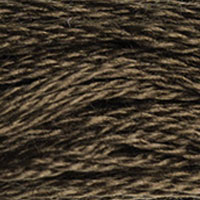
How DMC 3031 Looks on Fabric
The same thread appears different depending on your fabric. Always test on your project fabric.
White Aida
Cream / Ecru
Black Aida
Pairs Well With
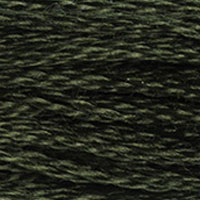
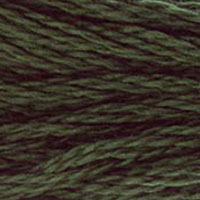
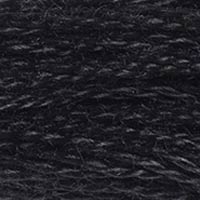
DMC colors commonly used alongside 3031 Very Dark Mocha Brown.
Suggested Palette
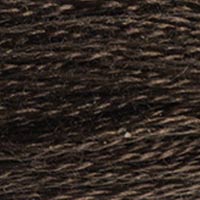
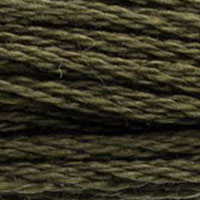
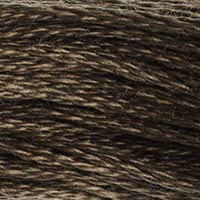
Shading Companions
Detailed Conversions
Where to Buy DMC 3031
This section contains affiliate links. We may earn a small commission at no cost to you.
Related Guides
Free Printable Thread Conversion Chart
Pick a brand and download a printable chart mapping all 552 DMC colors to that brand's closest equivalents. Free — no signup needed.
Opens in a new tab. Use your browser's Print → Save as PDF.