
Quick Conversion Table
| Brand | Equivalent | Match |
|---|---|---|
| Anchor | 293 | exact |
| Madeira | 0102 | close |
| Cosmo ⚠ | 700 | close |
| Sullivans | 45172 | close |
| J&P Coats | 2289 | close |
| Dimensions | 12295 | close |
| Bucilla | 103 | close |
| Candamar | 6129 | close |
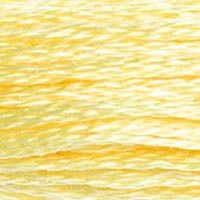
Highlights in embroidery are doing more than just suggesting light — they're telling the viewer where the light source is, what kind of light it is, and how the material being lit responds to that light. DMC 727 Very Light Topaz is specifically designed for the warm highlight end of yellow-toned subjects. At hex #FFF1AF, it retains the topaz family's clear yellow warmth at a value light enough to pop against DMC 725 and 726. The result is a highlight that reads as vivid, warm, golden light — the brightness of sunlight on petals, not the cooler glow of moonlight or fluorescence.
Highlight Physics
Why do highlights need to stay in the same color family as the fill areas? Because light hitting a colored surface takes on the character of that surface. A yellow sunflower petal in direct sunlight reflects yellow light — the highlight is a brighter, lighter version of the same yellow, not a neutral white. DMC 727 captures this behavior. Using a cool or neutral highlight over 726 fill would suggest metallic reflection rather than organic material; using 727 maintains the sense of a yellow object in warm light.
This principle guides the use of 727 across all warm-yellow subjects: the highlights are always a warmer, lighter version of the main color, not a step toward white. In sunflowers, the petal tip highlight uses 727. In daffodils, the corona rim in brightest light uses 727. In golden bird plumage — canaries, yellowhammers, American goldfinches — the breast highlight uses 727 where the feathers catch maximum light.
Candle and Light Source Rendering
Candlelight designs — a candle in a holder, a lit Christmas candle in a holiday sampler, a menorah candle in a Hanukkah piece — need a warm light emanation that reads as actual warm golden light rather than white brightness. DMC 727 provides the outer halo of warmth around a candle flame, fading outward from the flame center (often worked in 3078 Very Light Golden Yellow or even Blanc) through 727 and 726 into the surrounding medium tones. This gradient from warm-light to warm-mid-tone is more convincing than using neutral or cool threads for the same glow effect.
Fire effects similarly use 727 for the outer, cooler regions of a flame where the yellow predominates before the hot center shifts toward orange and white. Combined with DMC 726 and DMC 972 Burnt Orange or DMC 970 Light Pumpkin, 727 completes a flame vocabulary that reads as physically accurate as embroidery can achieve.
Blending and Fine Work
DMC 727 frequently appears in blended needle applications — one strand of 727 combined with one strand of a slightly darker yellow, or one strand of 727 combined with DMC 3823 Ultra Pale Yellow for an extremely pale warm yellow that sits between 727 and true white. These blends extend the value range of the topaz family without requiring separate thread colors, useful for very fine shading work in complex pieces. On fine evenweave worked over-one, single strands of 727 create delicate yellow detail that reads as sunlit texture rather than solid color.
Anchor 293 is an exact match for DMC 727. Madeira 0102 rates as close — a slight difference at this pale-bright end of the topaz family, possibly in saturation or warmth. For most highlight applications, Madeira 0102 is functional, but if 727 is doing precise work at the top of a tight shading sequence, it's worth comparing swatches.
Cosmo 700 and Sullivans 45172 are close. Interestingly, Cosmo 700 appears as the equivalent for both DMC 677 Very Light Old Gold and DMC 727 Very Light Topaz — these two DMC colors are distinct (677 is warmer and more golden, 727 is cleaner and more yellow), so the Cosmo 700 sits somewhere between them. In applications where 727's clean yellow quality is important, Cosmo 700 may read slightly warmer than expected.
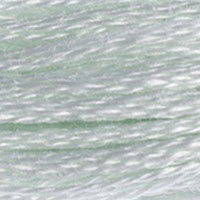
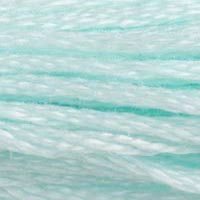
Within the DMC range, DMC 3823 Ultra Pale Yellow is paler and less saturated than 727 — the topaz quality is largely absent, replaced by a very pale neutral yellow. DMC 744 Pale Yellow is closer to 727 in the sense that it's a clean pale yellow, though slightly warmer and less bright. For highlight work over 726 fills, DMC 3078 Very Light Golden Yellow provides a similar light-yellow highlight with a slightly warmer, more golden character. None of these is a drop-in replacement for 727's specific topaz warmth, but they approximate the highlight function in different temperature registers.
Reference quality
How We Validate This Color Record
Use this page as a reference card for DMC 727: the structured data, quick conversions, and long-form copy are all tied back to the same stored color record.
- Methodology
- This page renders DMC 727, its hex value, and every brand equivalent from the site's source-of-truth color record, then checks long-form body copy against those same stored fields.
- Verification status
- Source-field checked. The page content is audited against the stored DMC number, brand equivalents, and match-quality labels before publishing.
- Last reviewed
- 2026-04-20
- Approximation warning
- Screen hex values, thread photos, and cross-brand conversions are reference aids. Dye lots, thread sheen, and fabric color can still shift the result in hand.
Decision guide
When to use the DMC 727 reference page
This page should help you decide faster between palette planning, brand substitution, and shade comparison without turning the color record into a thin lookup page.
Best for
- + Palette planning when you want the stored DMC 727 Very Light Topaz record, hex value #FFF1AF, and linked brand equivalents in one place.
- + Checking the quickest cross-brand shortlist before you buy floss, compare stash substitutes, or route into a more specific conversion page.
- + Finding nearby shades in the yellows family before you commit to accents, shading, or background blends.
Watch for
- ! Screen previews are only reference aids. Very Light Topaz can shift on real fabric because thread sheen, stitch coverage, and room lighting change how the color reads.
- ! A stored equivalent is still a shortlist, not a guarantee that two brands will disappear into each other in the same stitched motif.
- ! Older charts, discontinued kit floss, and dye-lot variation can all introduce small but visible differences that the page cannot detect for you.
Before you commit
- Confirm the role of DMC 727 Very Light Topaz: decide whether you need an exact hero shade, a forgiving background, or a rough stash substitute.
- Compare on project fabric: view the skein or stitched sample on the same fabric count and color you will actually use.
- Use the linked conversion pages next: open the brand-specific pages when you need match-quality caveats before substituting away from the DMC reference.
DMC 727 FAQ
These questions appear on the page so the FAQ schema stays aligned with what visitors can actually read.
What is the Anchor equivalent of DMC 727?+
The closest Anchor equivalent to DMC 727 (Very Light Topaz) is Anchor 293. This is an exact match.
What color is DMC 727?+
DMC 727 is called "Very Light Topaz" and has a hex color value of #FFF1AF. It belongs to the yellows color family.
What is the Madeira equivalent of DMC 727?+
The closest Madeira equivalent to DMC 727 (Very Light Topaz) is Madeira 0102. This is a close match.
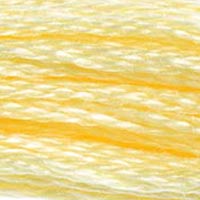
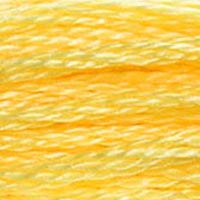
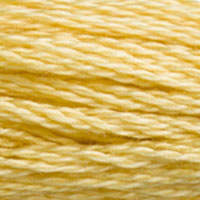
How DMC 727 Looks on Fabric
The same thread appears different depending on your fabric. Always test on your project fabric.
White Aida
Cream / Ecru
Black Aida
Pairs Well With
DMC colors commonly used alongside 727 Very Light Topaz.
Suggested Palette
Shading Companions
Detailed Conversions
Where to Buy DMC 727
This section contains affiliate links. We may earn a small commission at no cost to you.
Related Guides
Free Printable Thread Conversion Chart
Pick a brand and download a printable chart mapping all 552 DMC colors to that brand's closest equivalents. Free — no signup needed.
Opens in a new tab. Use your browser's Print → Save as PDF.