
Quick Conversion Table
| Brand | Equivalent | Match |
|---|---|---|
| Anchor | 256 | exact |
| Madeira | 1411 | close |
| Cosmo ⚠ | 326 | close |
| Sullivans | 45255 | close |
| J&P Coats | 6256 | close |
| Dimensions | 16256 | close |
| Bucilla | 2680 | close |
| Candamar | 6060 | close |
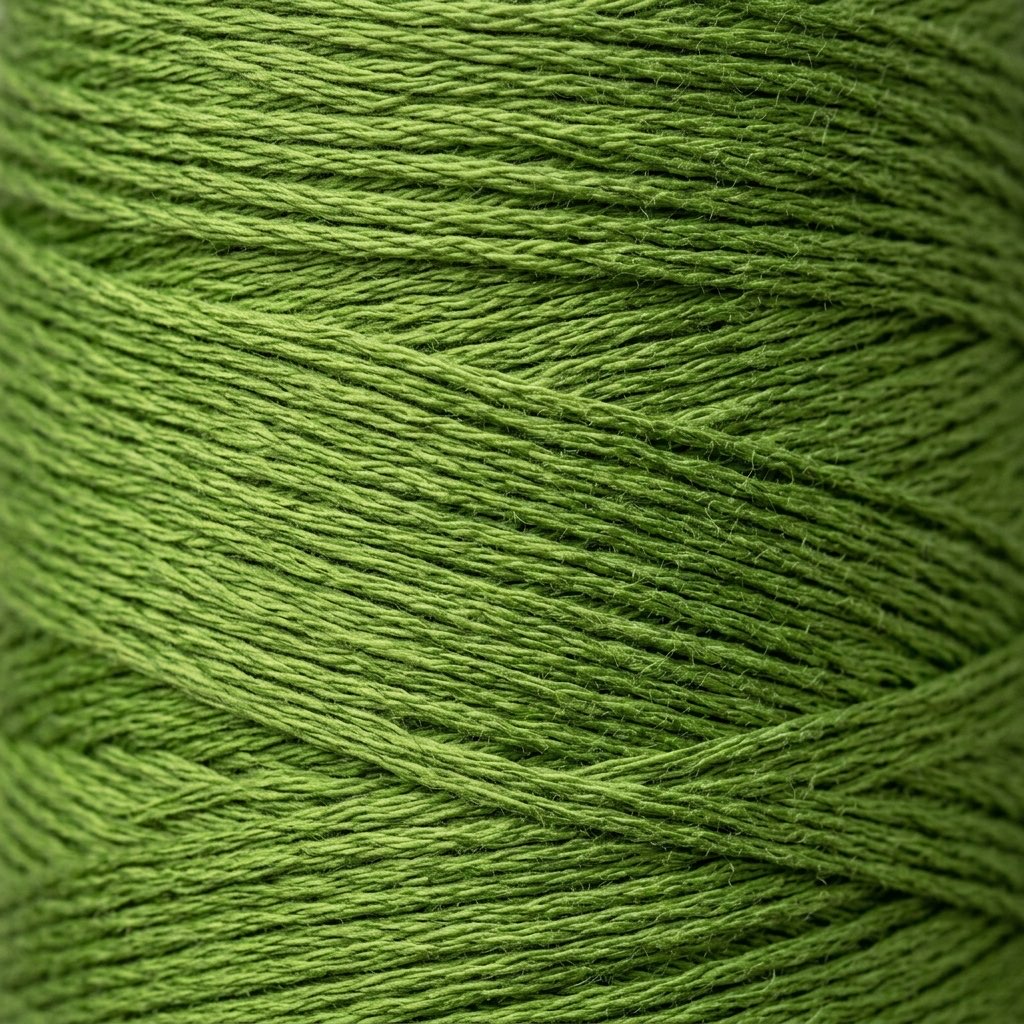
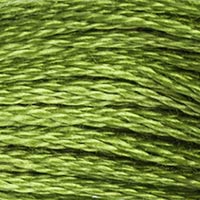
There are greens that whisper and greens that shout, and DMC 906 Medium Parrot Green definitely leans toward the louder end of the spectrum. At #7FB335 it's bright, slightly lime-flavored, and unambiguously cheerful — the kind of green you'd see on a wet fern after rain, or in the feathers of an actual parrot catching full tropical sunlight. It's not a restrained color. Used in large fills it commands attention; used as a highlight or accent, it provides exactly the jolt of vitality that more muted greens can't deliver.
As the third of four colors in the DMC Parrot Green family, 906 sits in the true middle of the value range — darker than DMC 907 (Light Parrot Green) but meaningfully lighter than DMC 905 (Dark Parrot Green). In practical terms, it's often the color that does the most work in a Parrot Green shading scheme, covering the large mid-tone fill areas while the darker and lighter siblings handle the shadows and highlights. This makes 906 the color you'll burn through fastest in a parrot-heavy WIP.
The Brightness Factor in Cross-Stitch
Working with genuinely bright colors in cross-stitch requires some strategic thinking that doesn't apply to more muted shades. DMC 906 on white 14-count Aida can feel almost electric, especially in large fill areas. This is sometimes exactly what you want — pop art designs, tropical party goods, cheerful character embroidery — but in naturalistic designs where you're aiming for realistic foliage, the brightness can read as artificial.
The typical solution is to use 906 as an accent rather than a primary fill, reserving it for the most brightly lit surfaces while DMC 905 (Dark Parrot Green) or DMC 469 (Avocado Green) carry the main fill. On natural linen or antique white evenweave, the same color reads significantly more naturalistic — the cream ground tone knocks the brightness back just enough to make 906 feel like sunlit tropical vegetation rather than highlighter pen.
Fabric count also affects how 906 reads. On 18-count or 28-count evenweave, the smaller stitch scale reduces the visual intensity slightly, making it feel more refined. For miniature botanical pieces or ornament designs on 28-count, 906 can serve as a primary leaf fill without overwhelming the composition.
Projects That Love This Color
The applications where 906 truly earns its place are those that embrace its tropical, vivid quality rather than trying to domesticate it. Parrot and exotic bird designs are the obvious example — the 904–907 family handles the body and wing feathers of green parrots with remarkable accuracy, especially when combined with DMC 444 (Dark Lemon) for yellow-green transitions and DMC 310 (Black) for the markings. Wildlife designs featuring tropical frogs, lizards, and insects similarly depend on the brightness of 906 to convey the vivid coloring of these animals.
Garden and spring designs use 906 for the fresh, new-growth quality of early spring leaves — the particular bright green of unfurling ferns and young shoots before they deepen into summer darkness. Paired with DMC 472 (Ultra Light Avocado Green) for the very tips and DMC 905 for the bases, a convincing fiddlehead fern emerges.
Like its siblings in the Parrot Green family, DMC 906 has exact-match equivalents in both Anchor (256) and Madeira (1411). These conversions are reliable, and if you're building a complete Parrot Green gradient from either brand, the equivalents exist for the entire 904–907 range, which simplifies multi-brand shopping considerably.
Anchor 256 is the go-to substitute for most stitchers using Anchor thread, and it performs well in both fill and accent roles. Because 906 is a mid-value color rather than a dark or pale extreme, the brand-to-brand variation is slightly more visible than it might be at the extremes of the value range — mid-tones are where the eye picks up color differences most easily. Test under your actual stitching light before committing to a brand switch mid-project.
Cosmo 326 and Sullivans 45255 both carry close ratings. The Cosmo version is generally a serviceable substitute, though some stitchers find it reads marginally cooler (more blue-green) compared to the warm yellow-green character of DMC 906. Sullivans 45255 similarly reads as close but not identical.
For projects where 906 is unavailable and staying within DMC, DMC 704 (Bright Chartreuse) provides a comparable level of brightness in the yellow-green range, though it leans more lime and less parrot. DMC 472 (Ultra Light Avocado Green) is much lighter but shares the yellow-green axis. If you need to darken rather than substitute, DMC 905 or DMC 904 are the obvious next steps down in the same family.
Reference quality
How We Validate This Color Record
Use this page as a reference card for DMC 906: the structured data, quick conversions, and long-form copy are all tied back to the same stored color record.
- Methodology
- This page renders DMC 906, its hex value, and every brand equivalent from the site's source-of-truth color record, then checks long-form body copy against those same stored fields.
- Verification status
- Source-field checked. The page content is audited against the stored DMC number, brand equivalents, and match-quality labels before publishing.
- Last reviewed
- 2026-04-20
- Approximation warning
- Screen hex values, thread photos, and cross-brand conversions are reference aids. Dye lots, thread sheen, and fabric color can still shift the result in hand.
Decision guide
When to use the DMC 906 reference page
This page should help you decide faster between palette planning, brand substitution, and shade comparison without turning the color record into a thin lookup page.
Best for
- + Palette planning when you want the stored DMC 906 Medium Parrot Green record, hex value #7FB335, and linked brand equivalents in one place.
- + Checking the quickest cross-brand shortlist before you buy floss, compare stash substitutes, or route into a more specific conversion page.
- + Finding nearby shades in the greens family before you commit to accents, shading, or background blends.
Watch for
- ! Screen previews are only reference aids. Medium Parrot Green can shift on real fabric because thread sheen, stitch coverage, and room lighting change how the color reads.
- ! A stored equivalent is still a shortlist, not a guarantee that two brands will disappear into each other in the same stitched motif.
- ! Older charts, discontinued kit floss, and dye-lot variation can all introduce small but visible differences that the page cannot detect for you.
Before you commit
- Confirm the role of DMC 906 Medium Parrot Green: decide whether you need an exact hero shade, a forgiving background, or a rough stash substitute.
- Compare on project fabric: view the skein or stitched sample on the same fabric count and color you will actually use.
- Use the linked conversion pages next: open the brand-specific pages when you need match-quality caveats before substituting away from the DMC reference.
DMC 906 FAQ
These questions appear on the page so the FAQ schema stays aligned with what visitors can actually read.
What is the Anchor equivalent of DMC 906?+
The closest Anchor equivalent to DMC 906 (Medium Parrot Green) is Anchor 256. This is an exact match.
What color is DMC 906?+
DMC 906 is called "Medium Parrot Green" and has a hex color value of #7FB335. It belongs to the greens color family.
What is the Madeira equivalent of DMC 906?+
The closest Madeira equivalent to DMC 906 (Medium Parrot Green) is Madeira 1411. This is a close match.
The Parrot Green family — DMC 904 through 907 — has become a reliable foundation for a specific category of project: tropical and exotic wildlife. Parrot designs are the most literal application, and they're surprisingly popular in both traditional chart form and as counted cross-stitch adaptations of photographs. A well-rendered macaw or Amazon parrot can showcase this entire color family across a single bird's wing, with 904 in the deep shadow feathers, 906 across the broad primary surface, and 907 catching the light at the feather tips.
Beyond birds, stitchers have used the Parrot Green family for exotic botanical pieces in the style of 19th-century natural history illustration — the kind of detailed botanical print that depicts specific plant specimens with their particular leaf shapes, veining patterns, and stem colors. The brightness of 906 in particular captures the waxy surface quality of tropical leaves: monstera, bird-of-paradise, philodendron. These make striking wall hangings and have proven popular in the FlossTube community as ambitious WIPs.
Simpler applications include spring and garden ornaments, Easter designs with fresh green elements, and any project that needs cheerful, unequivocal greenness — grass in children's character designs, bright vegetable gardens, lawn-and-garden themed pieces. For these designs, 906 paired with DMC 702 (Kelly Green) and DMC 907 (Light Parrot Green) builds a simple, effective green palette that reads well on white Aida at 14-count.
How DMC 906 Looks on Fabric
The same thread appears different depending on your fabric. Always test on your project fabric.
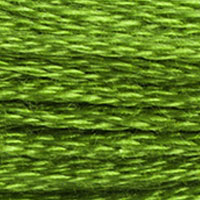
White Aida
Cream / Ecru
Black Aida
Pairs Well With
DMC colors commonly used alongside 906 Medium Parrot Green.
Tropical Paradise
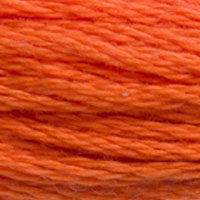
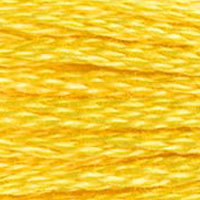
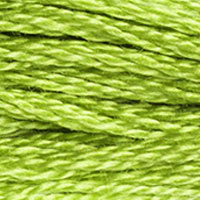
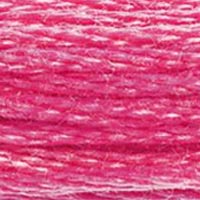
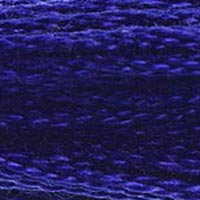
Shading Companions
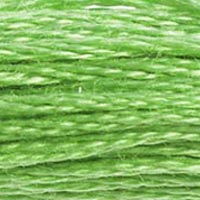
Detailed Conversions
Where to Buy DMC 906
This section contains affiliate links. We may earn a small commission at no cost to you.
Related Guides
Free Printable Thread Conversion Chart
Pick a brand and download a printable chart mapping all 552 DMC colors to that brand's closest equivalents. Free — no signup needed.
Opens in a new tab. Use your browser's Print → Save as PDF.