
Quick Conversion Table
| Brand | Equivalent | Match |
|---|---|---|
| Anchor | 1210 | close |
| Madeira | 1006 | close |
| Cosmo ⚠ | 2591 | close |
| Sullivans | 45201 | close |
Delftware in Thread Form
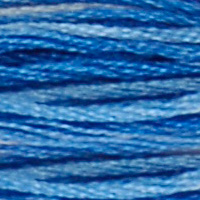
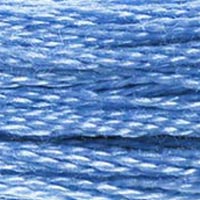
Walk through the Rijksmuseum in Amsterdam, or browse any antique market in the Netherlands, and you'll encounter Delftware — that distinctive blue-and-white pottery that has been produced since the 17th century. The blues on those pieces aren't flat or uniform. They shift from deep cobalt in thick glaze to pale, almost silver-blue in thin washes, with every gradation in between across a single painted stroke. DMC 121, Variegated Delft Blue, captures exactly that quality: the way a potter's brush leaves more pigment at the start of a stroke and thins out as it travels.
This is a thread that understands its own name. The variegation range sits squarely in the medium blue territory that defines Delftware — not as dark as navy, not as bright as cobalt, but that distinctive blue-grey that makes Delft pottery immediately recognizable. The lighter passages have a silvery quality, while the deeper sections carry enough blue intensity to read as the painted decoration rather than the white ceramic ground.
Ceramic Arts and Cross-Stitch: A Natural Partnership
Delftware patterns have been translated into cross-stitch designs for decades, and with good reason. The geometric nature of tile patterns, the repeating motifs, the limited palette — it all maps beautifully onto a counted-thread medium. Windmills, tulips, sailing ships, pastoral scenes framed in ornamental borders: these classic Delft subjects work as cross-stitch patterns almost without modification.
DMC 121 was essentially made for these designs. Where a pattern calling for solid blues requires you to manage multiple shades to suggest the handpainted quality of actual Delftware, 121 does that work on its own. The variegation creates exactly the kind of organic color variation you see in real ceramic painting, where the human hand naturally produces inconsistent pigment density. A windmill motif stitched in 121 looks more like a painted tile than the same motif in solid DMC 809 (Delft Blue) — ironic, since the solid thread actually carries the Delft name in the main line.
Portuguese azulejo tiles follow a similar blue-and-white tradition, and they're equally well served by this thread. Azulejo patterns tend toward more complex geometric frameworks than Dutch Delft, with interlocking arabesques and dense border patterns that benefit from the visual texture of variegation. The subtle color shifts break up what might otherwise be a visually overwhelming expanse of same-color stitching in a large tile-pattern sampler.
Beyond Ceramics: Skies, Florals, and Backgrounds
DMC 121's range also makes it a strong choice for sky areas in landscape designs, particularly the kind of hazy, overcast sky you'd find above a Dutch polder or English estuary. It lacks the cheerful brightness of a clear-sky blue, instead suggesting a sky with character — clouds thinning and thickening, patches of brighter blue showing through grey. For coastal landscape pieces, this atmospheric quality is enormously valuable.
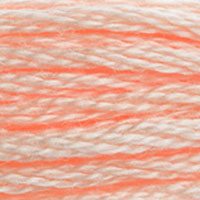
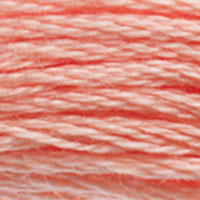
Floral work benefits from 121 as well. Forget-me-nots, hydrangeas, and delphiniums all display the kind of natural color variation that variegated thread captures convincingly. A cluster of forget-me-nots stitched in 121 will show slight petal-to-petal color differences that mimic the real flowers far better than a flat solid shade. Combine with DMC 3325 (Light Baby Blue) for highlighted petals and DMC 322 (Dark Baby Blue) for shaded petals, and the variegated thread bridges between them organically.
On fabric, 121 pairs beautifully with natural linen — the warm fabric tone moderates the cool blue and adds to that aged, ceramic quality. White Aida gives a cleaner, more modern look that works well for Scandinavian-influenced designs. Avoid dark fabrics unless you're stitching over one on a very high count, as the lighter passages of the variegation may not achieve full coverage and can look patchy.
Capturing the Delft Character Without DMC 121
The specific challenge with replacing this thread is recreating the handpainted quality that makes it so effective in ceramic-inspired designs. Anchor 1210 is a close match as a solid — a pleasant medium blue — but it delivers uniformity where 121 delivers variation. For Delftware or azulejo patterns, that uniformity actually undermines the design's visual intent.
Madeira 1006 captures the right tonal neighborhood and works well enough for smaller motifs. Cosmo 2591 and Sullivans 45201 are similarly positioned: they get the color right, but they can't replicate the effect. If your design uses 121 in large fill areas specifically for the variegated quality, consider whether a hand-overdyed thread from a specialty dyer might serve better than a mainstream solid substitute.
For a DIY approach within the DMC range, try alternating between DMC 809 (Delft Blue) and DMC 3755 (Baby Blue) every few stitches, or use a blended needle with one strand of each. This won't perfectly mimic the smooth variegation of 121, but it creates a tonal variation that preserves the handmade, uneven quality that ceramic-inspired designs need. Some stitchers even deliberately work with slightly uneven tension when using solid thread in Delft patterns — the tiny variations in stitch size create shadow differences that approximate the variegation effect at a glance.
If you're stitching a small ornament or bookmark where only a few square inches of 121 appear, any solid medium blue will do — the variegation simply doesn't have enough canvas to develop its character at that scale.
Reference quality
How We Validate This Color Record
Use this page as a reference card for DMC 121: the structured data, quick conversions, and long-form copy are all tied back to the same stored color record.
- Methodology
- This page renders DMC 121, its hex value, and every brand equivalent from the site's source-of-truth color record, then checks long-form body copy against those same stored fields.
- Verification status
- Source-field checked. The page content is audited against the stored DMC number, brand equivalents, and match-quality labels before publishing.
- Last reviewed
- 2026-04-20
- Approximation warning
- Screen hex values, thread photos, and cross-brand conversions are reference aids. Dye lots, thread sheen, and fabric color can still shift the result in hand.
Decision guide
When to use the DMC 121 reference page
This page should help you decide faster between palette planning, brand substitution, and shade comparison without turning the color record into a thin lookup page.
Best for
- + Palette planning when you want the stored DMC 121 Variegated Delft Blue record, hex value #7890C0, and linked brand equivalents in one place.
- + Checking the quickest cross-brand shortlist before you buy floss, compare stash substitutes, or route into a more specific conversion page.
- + Finding nearby shades in the blues family before you commit to accents, shading, or background blends.
Watch for
- ! Screen previews are only reference aids. Variegated Delft Blue can shift on real fabric because thread sheen, stitch coverage, and room lighting change how the color reads.
- ! A stored equivalent is still a shortlist, not a guarantee that two brands will disappear into each other in the same stitched motif.
- ! Older charts, discontinued kit floss, and dye-lot variation can all introduce small but visible differences that the page cannot detect for you.
Before you commit
- Confirm the role of DMC 121 Variegated Delft Blue: decide whether you need an exact hero shade, a forgiving background, or a rough stash substitute.
- Compare on project fabric: view the skein or stitched sample on the same fabric count and color you will actually use.
- Use the linked conversion pages next: open the brand-specific pages when you need match-quality caveats before substituting away from the DMC reference.
DMC 121 FAQ
These questions appear on the page so the FAQ schema stays aligned with what visitors can actually read.
What is the Anchor equivalent of DMC 121?+
The closest Anchor equivalent to DMC 121 (Variegated Delft Blue) is Anchor 1210. This is a close match.
What color is DMC 121?+
DMC 121 is called "Variegated Delft Blue" and has a hex color value of #7890C0. It belongs to the blues color family.
What is the Madeira equivalent of DMC 121?+
The closest Madeira equivalent to DMC 121 (Variegated Delft Blue) is Madeira 1006. This is a close match.
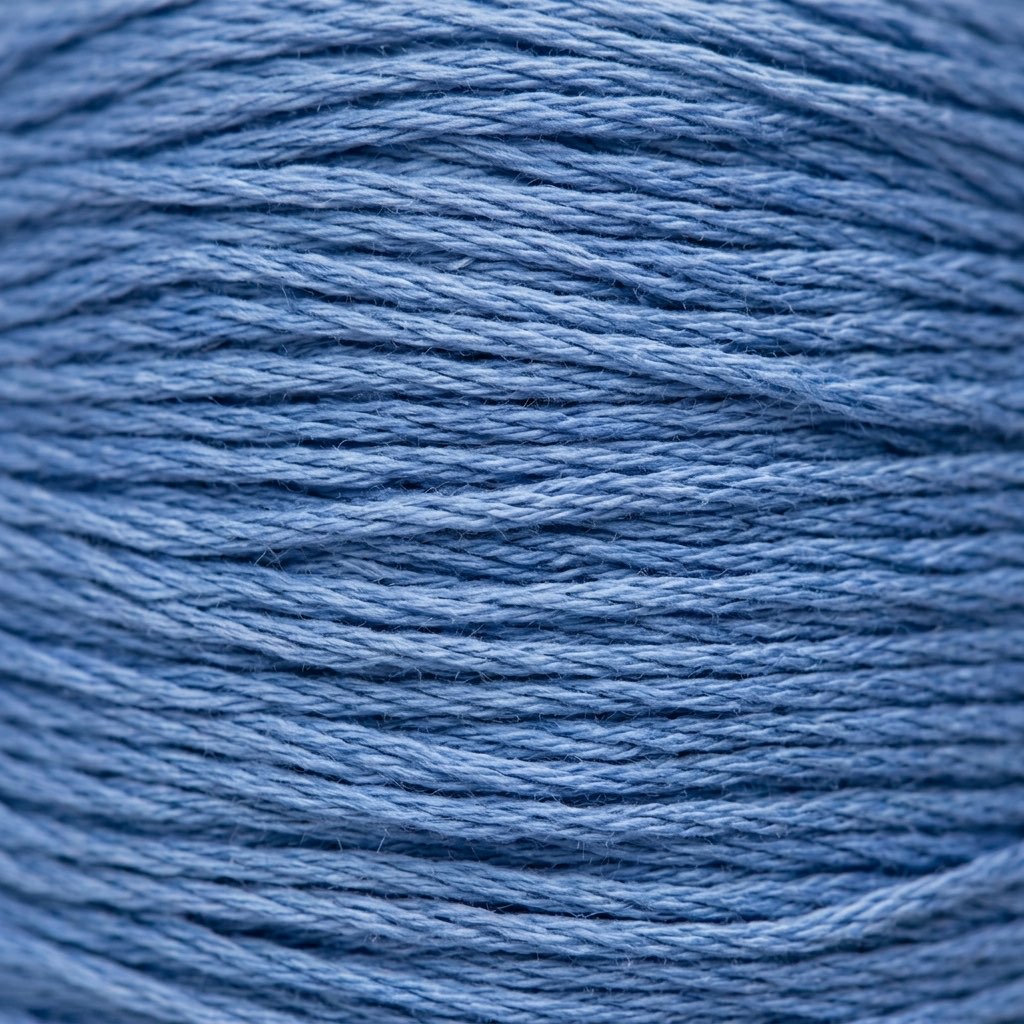
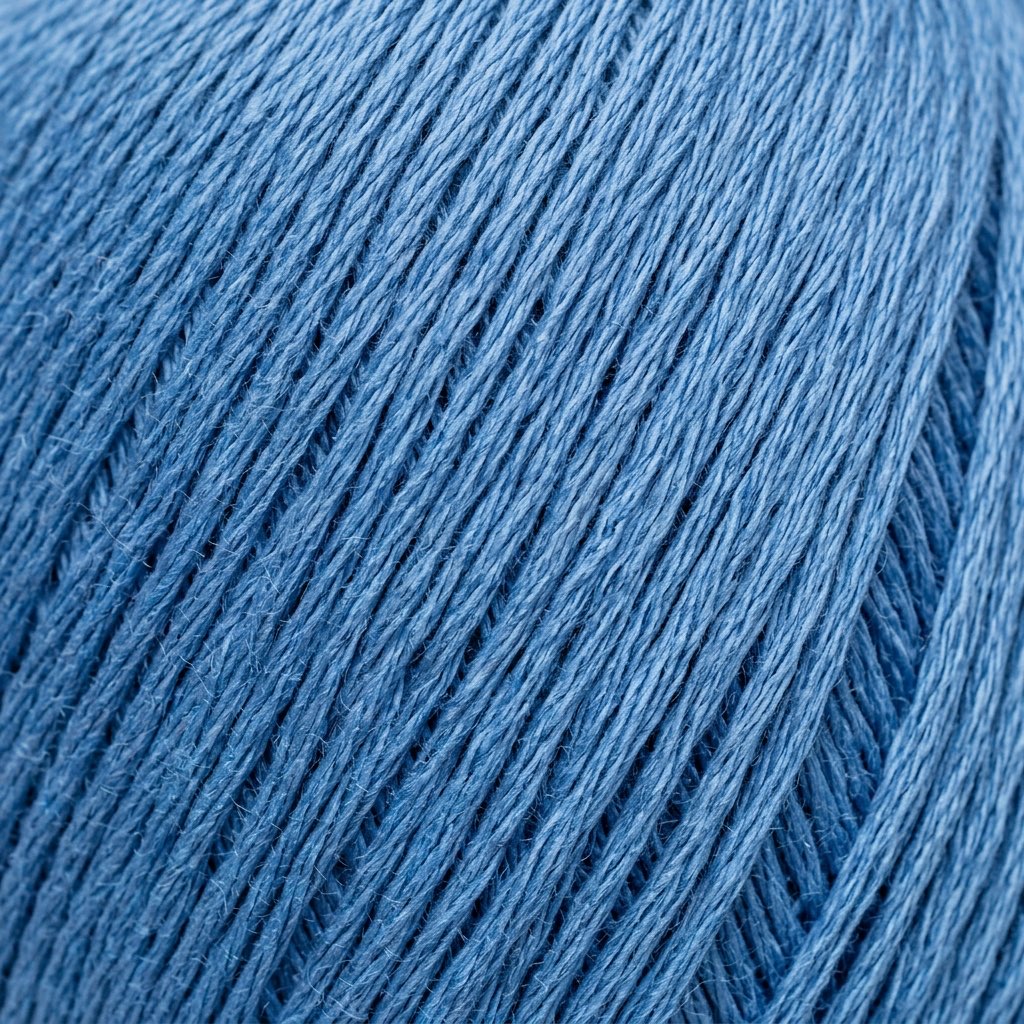
How DMC 121 Looks on Fabric
The same thread appears different depending on your fabric. Always test on your project fabric.
White Aida
Cream / Ecru
Black Aida
Pairs Well With
DMC colors commonly used alongside 121 Variegated Delft Blue.
Suggested Palette
Shading Companions
Detailed Conversions
Where to Buy DMC 121
This section contains affiliate links. We may earn a small commission at no cost to you.
Related Guides
Free Printable Thread Conversion Chart
Pick a brand and download a printable chart mapping all 552 DMC colors to that brand's closest equivalents. Free — no signup needed.
Opens in a new tab. Use your browser's Print → Save as PDF.