
Quick Conversion Table
| Brand | Equivalent | Match |
|---|---|---|
| Anchor | 176 | exact |
| Madeira | 0902 | close |
| Cosmo ⚠ | 663 | close |
| Sullivans | 45437 | close |
| J&P Coats | 7110 | close |
Periwinkle's More Sophisticated Cousin
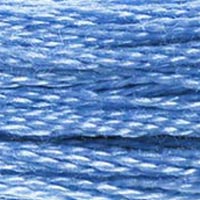
Periwinkle gets a lot of attention in the crafting world, but DMC 3839 Medium Lavender Blue sits in a sweeter spot: cooler than periwinkle, cleaner than cornflower, and with just enough violet to give it personality without commitment. At #7B8EAB, this is a mid-value blue that leans purple just enough to feel different from every other blue in the DMC range without announcing itself as purple. It's the color of a clear sky at around four in the afternoon, or the interior of a blue morning glory bloom.
Within the lavender blue family — sitting between DMC 3838 (Dark Lavender Blue) and DMC 3840 (Light Lavender Blue) — 3839 plays the role most mid-values play: it occupies the most stitches, carries the visible hue identity, and gets shaded on either side to create form. Because this color is the truest expression of what "lavender blue" means to most eyes, it also works as a standalone color in simpler designs that don't use the full gradient.
The color theory story here is interesting. DMC 3839's position on the color wheel puts it directly opposite a warm amber-orange — which means it pairs beautifully with DMC 3853 (Dark Autumn Gold) or DMC 976 (Medium Golden Brown) in complementary color schemes. This complementary dynamic is dramatic when used for contrast and subtle when used for harmony by pulling proportions heavily toward the blue side.
Where This Color Shows Up and Why It Works
Landscape stitchers are frequent users of 3839 for daytime sky areas where pure blue would read too saturated and baby blue would read too pale. It occupies a particularly useful value zone for rendering the mid-sky region above the horizon line in pastoral or country scenes. In atmospheric perspective (where distant elements become lighter and more muted), 3839 makes an excellent middle-ground sky tone.
Portrait-adjacent embroideries — Celtic knotwork, art nouveau women in flowing garments, medieval tapestry-inspired pieces — often reach for 3839 for draped fabric areas where a cool mid-blue is needed with a slight richness. The subtle violet in it prevents it from reading as a cold, clinical blue while maintaining the cool temperature that these styles call for.
On white 14-count Aida, the coverage is full and confident. On cream linen stitched over-two, it takes on a slightly softer, more antique quality — the warm ground pushes its coolness back a shade, which is often exactly the adjustment needed in heritage-style pieces. Stitchers working on 28-count evenweave over-one report clean, clear stitches with good thread behavior and minimal fraying.
One technique worth noting for large filled areas: because 3839 is a true mid-value blue, inconsistent tension shows up more readily than it would in a very light or very dark color. Railroading your stitches — using a separate needle to keep the strands parallel as you lay each stitch — noticeably improves the final surface. It's one of those colors that rewards the extra few seconds per stitch with a measurably better result.
DMC 3839 benefits from two exact matches across popular brands, making it one of the easier medium blues to substitute when needed.
Anchor 176 is an exact match. This is a reliable conversion that stitchers have confirmed in practice across many projects. Anchor and DMC handle slightly differently — Anchor tends to have a marginally softer twist — but the color fidelity is excellent. You can substitute Anchor 176 for DMC 3839 with confidence for full projects or individual color replacements.
Madeira 0902 is also exact. Madeira's thread has a slightly silkier finish that gives filled areas a gentle sheen. For most projects this is invisible in the finished piece, but it can be a slight consideration if you're mixing Madeira with non-Madeira threads in the same visible area.
Cosmo 663 is rated close. Cosmo's lavender blue family trends brighter and slightly more vivid than DMC's, so 663 may read as a touch more electric than 3839's quieter, controlled blue-violet. For high-energy or contemporary designs, this might actually be preferable.
Sullivans 45437 is close and functional for standalone use. Verify lot consistency if sourcing multiple skeins for a large fill area.
- For a slightly warmer blue at similar value, DMC 340 (Medium Blue Violet) is a useful alternative.
- If the project calls for something closer to pure blue without the violet shift, DMC 800 (Pale Delft Blue) is a softer option at higher value, or DMC 799 (Medium Delft Blue) at similar darkness.
Reference quality
How We Validate This Color Record
Use this page as a reference card for DMC 3839: the structured data, quick conversions, and long-form copy are all tied back to the same stored color record.
- Methodology
- This page renders DMC 3839, its hex value, and every brand equivalent from the site's source-of-truth color record, then checks long-form body copy against those same stored fields.
- Verification status
- Source-field checked. The page content is audited against the stored DMC number, brand equivalents, and match-quality labels before publishing.
- Last reviewed
- 2026-04-20
- Approximation warning
- Screen hex values, thread photos, and cross-brand conversions are reference aids. Dye lots, thread sheen, and fabric color can still shift the result in hand.
Decision guide
When to use the DMC 3839 reference page
This page should help you decide faster between palette planning, brand substitution, and shade comparison without turning the color record into a thin lookup page.
Best for
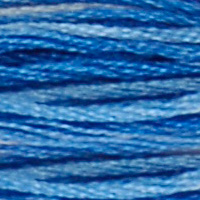
- + Palette planning when you want the stored DMC 3839 Medium Lavender Blue record, hex value #7B8EAB, and linked brand equivalents in one place.
- + Checking the quickest cross-brand shortlist before you buy floss, compare stash substitutes, or route into a more specific conversion page.
- + Finding nearby shades in the blues family before you commit to accents, shading, or background blends.
Watch for
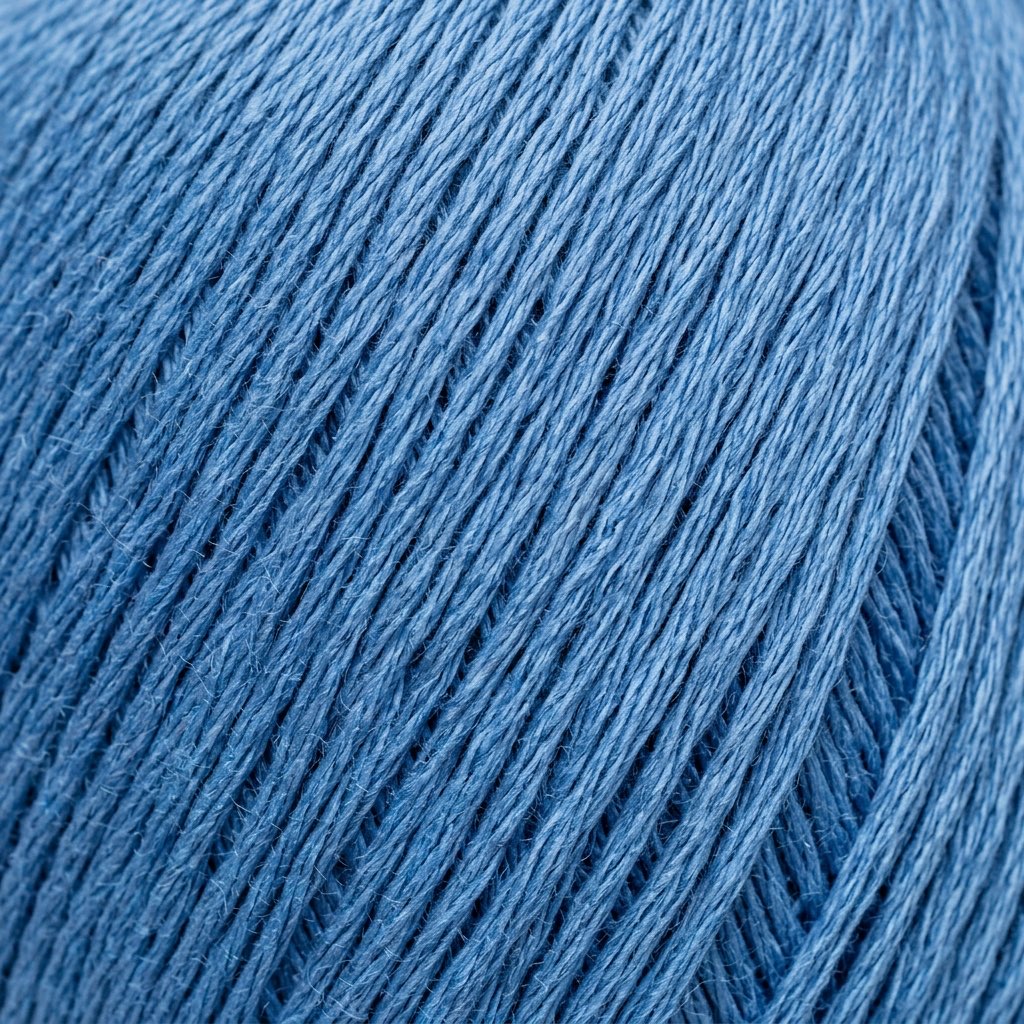
- ! Screen previews are only reference aids. Medium Lavender Blue can shift on real fabric because thread sheen, stitch coverage, and room lighting change how the color reads.
- ! A stored equivalent is still a shortlist, not a guarantee that two brands will disappear into each other in the same stitched motif.
- ! Older charts, discontinued kit floss, and dye-lot variation can all introduce small but visible differences that the page cannot detect for you.
Before you commit
- Confirm the role of DMC 3839 Medium Lavender Blue: decide whether you need an exact hero shade, a forgiving background, or a rough stash substitute.
- Compare on project fabric: view the skein or stitched sample on the same fabric count and color you will actually use.
- Use the linked conversion pages next: open the brand-specific pages when you need match-quality caveats before substituting away from the DMC reference.
DMC 3839 FAQ
These questions appear on the page so the FAQ schema stays aligned with what visitors can actually read.
What is the Anchor equivalent of DMC 3839?+
The closest Anchor equivalent to DMC 3839 (Medium Lavender Blue) is Anchor 176. This is an exact match.
What color is DMC 3839?+
DMC 3839 is called "Medium Lavender Blue" and has a hex color value of #7B8EAB. It belongs to the blues color family.
What is the Madeira equivalent of DMC 3839?+
The closest Madeira equivalent to DMC 3839 (Medium Lavender Blue) is Madeira 0902. This is a close match.
Projects Where Medium Lavender Blue Shines
DMC 3839 appears across a wide range of design categories, but a few project types use it with particular effect:
- Twilight and dusk sky panels: The blue-violet cast makes 3839 ideal for the lower sky in twilight scenes, where the warm-to-cool gradient of sunset transitions into the blue upper atmosphere. Used alongside DMC 158 (Medium Very Dark Cornflower Blue) for depth and DMC 3840 for the lighter upper sky, it creates convincing atmospheric gradients.
- Wildflower and meadow designs: Morning glory, chicory, bachelor's button, and Siberian iris all use blue-violet tones close to 3839. It works especially well as the mid-tone fill in single blooms where the full 3838/3839/3840 gradient is deployed.
- Celtic and knotwork: The richer tone of 3839 suits the jewel-palette tradition of Celtic designs. It pairs well with DMC 321 (Red) and DMC 703 (Chartreuse) in traditional tricolor knotwork schemes.
- Year-long samplers: Many sampler patterns use the lavender blue family for seasonal motifs — particularly winter and spring sections where a cool but not harsh blue is needed for snowflakes, ice crystals, or early spring blooms.
How DMC 3839 Looks on Fabric
The same thread appears different depending on your fabric. Always test on your project fabric.

White Aida
Cream / Ecru
Black Aida
Pairs Well With
DMC colors commonly used alongside 3839 Medium Lavender Blue.
Suggested Palette
Shading Companions
Detailed Conversions
Where to Buy DMC 3839
This section contains affiliate links. We may earn a small commission at no cost to you.
Related Guides
Free Printable Thread Conversion Chart
Pick a brand and download a printable chart mapping all 552 DMC colors to that brand's closest equivalents. Free — no signup needed.
Opens in a new tab. Use your browser's Print → Save as PDF.