
Quick Conversion Table
| Brand | Equivalent | Match |
|---|---|---|
| Anchor | 352 | exact |
| Madeira | 2304 | close |
| Cosmo ⚠ | 131 | close |
| Sullivans | 45048 | close |
| J&P Coats | 5356 | close |
| Dimensions | 6108 | close |
| Bucilla | 930 | close |
| Candamar | 6108 | close |
The Color of Antique Furniture: Deep, Red-Tinged, and Undeniably Rich
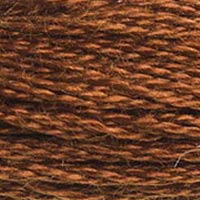
Walk into an estate sale and find a genuine mahogany sideboard — not the veneer, the real thing — and run your hand across the wood. That deep, almost impossibly rich red-brown, polished by a century of hands and wax and careful attention? DMC 300 is that color. It sits at the very darkest end of the mahogany family, a brown so deep and so suffused with red that it borders on being a dark rust or oxblood, yet never quite crosses over. It remains brown. Furniture brown. Heirloom brown. The kind of brown that whispers money and age and craftsmanship.
What separates 300 from the other dark browns in the DMC range is that red undertone. Compare it against DMC 898 (Very Dark Coffee Brown), which is equally dark but neutral-warm, or DMC 938 (Ultra Dark Coffee Brown), which trends almost black. None of them have 300's fire. That red base means 300 doesn't just recede into shadow the way neutral darks do — it holds its color even in the deepest values, maintaining a richness and warmth that purely dark threads sacrifice for depth. Under good light, a filled area of 300 practically glows like old garnet.
This dual personality — dark enough to anchor shadows, warm enough to maintain visual interest — makes 300 extraordinarily versatile as a shadow thread for warm palettes. It's the thread you reach for when DMC 310 (Black) would be too cold and too final, when you want your darkest value to still feel alive and connected to the warm tones above it. In autumn scenes, 300 is the shadow inside a carved pumpkin, the deep bark of a rain-wet oak, the glint of dark chestnuts. In portrait work, it's the shadow under auburn hair, the deepest fold of a burgundy velvet dress.
Building the Mahogany Gradient
The mahogany family — DMC 300, 301 (Medium Mahogany), 400 (Dark Mahogany), and 3776 (Light Mahogany) — is one of the most beautiful gradient families in the entire DMC range. From 300's near-black depth through to 3776's bright, almost orange-tinged warmth, the progression stays consistently red-based throughout, giving you a four-step transition that feels cohesive and luxurious. Extend it further with DMC 3856 (Ultra Very Light Mahogany) for highlights that continue the warm red-brown theme into peach territory.
This gradient is purpose-built for subjects that need warm, rich depth: hardwood furniture, violin bodies, polished leather shoes, dark horse coats, mahogany boats, and cherry wood cabinets. For a still life featuring any of these subjects, building your brown palette around the mahogany family rather than the neutral brown family (433-437) gives the finished piece a warmth and sophistication that cooler browns can't achieve.
When stitching 300 on white Aida, the red undertone is at its most visible — the high contrast against the white ground lets the warmth sing. On cream or ecru fabric, the red settles down slightly and the thread reads as more purely dark brown, which may be what you want for historical or vintage-themed pieces. On dark linen or colored fabric, 300's depth means it can get lost if you don't have lighter values adjacent to define its shapes.
Sepia Tones and Vintage Reproduction
One of 300's most compelling applications is in sepia-toned photography reproduction — those cross-stitch portraits and landscapes worked entirely in browns to mimic old photographs. In a sepia palette, 300 serves as the maximum darkness point, replacing black without the coldness that actual black introduces. Pair it with DMC 301, DMC 400, DMC 3826 (Golden Brown), DMC 3045 (Dark Yellow Beige), and DMC 3047 (Light Yellow Beige) for a six-thread sepia palette that covers the full tonal range from near-black to pale cream. The red warmth in 300 ties the darkest values to the warmer mid-tones in a way that a neutral dark brown wouldn't.
For these monochromatic or limited-palette pieces, stitch quality matters more than usual because the eye has nothing else to focus on besides value transitions and texture. Railroad every stitch, maintain consistent tension, and pay close attention to your needle's entry angle. On 18-count or finer, two strands of 300 provide satisfying coverage without bulk. On 14-count, you might find that the full six-ply thickness of two separated strands gives the dark areas a slightly raised texture compared to lighter values — not necessarily a problem, but something to be aware of in full-coverage pieces where evenness matters.
That Red Undertone Is Non-Negotiable
Any substitute for DMC 300 must carry the same red warmth. A dark brown that matches the value but lacks the red base will read as a completely different thread — it will go cold and dead in exactly the places where 300 should glow. This is one of those colors where looking at the hex value alone can mislead you; you need to see the thread on fabric, under your working light, before you commit.
Anchor 352 is an exact match and delivers reliably. The red undertone comes through clearly, and dye lot consistency is good. If you're working a large project that might span multiple skeins, Anchor is a safe choice here. Madeira 2304 is also rated exact and captures the mahogany depth well. Madeira's thread has a slightly different hand — some stitchers describe it as marginally silkier — but at this depth of color, textural differences are minimal.
Cosmo 131 is close but may lean slightly less red and slightly more pure brown than the DMC original. In a mahogany gradient where 300 is surrounded by other red-brown threads (301, 400, 3776), this slight drift could disrupt the family cohesion. Test it in context — not just against 300 alone, but against the other mahogany threads you're using.
Within the DMC range, don't confuse 300 with DMC 898 (Very Dark Coffee Brown) or DMC 938 (Ultra Dark Coffee Brown). Both are dark, but 898 is neutral-warm and 938 is nearly black — neither has the red fire that defines 300. If 300 is out of stock, DMC 400 (Dark Mahogany) is the closest family member, one step lighter but from the same red-brown lineage. You could use 400 as a substitute and let DMC 301 or even 3371 (Black Brown) cover the deepest shadow role, though you'll lose some tonal range.
Reference quality
How We Validate This Color Record
Use this page as a reference card for DMC 300: the structured data, quick conversions, and long-form copy are all tied back to the same stored color record.
- Methodology
- This page renders DMC 300, its hex value, and every brand equivalent from the site's source-of-truth color record, then checks long-form body copy against those same stored fields.
- Verification status
- Source-field checked. The page content is audited against the stored DMC number, brand equivalents, and match-quality labels before publishing.
- Last reviewed
- 2026-04-20
- Approximation warning
- Screen hex values, thread photos, and cross-brand conversions are reference aids. Dye lots, thread sheen, and fabric color can still shift the result in hand.
Decision guide
When to use the DMC 300 reference page
This page should help you decide faster between palette planning, brand substitution, and shade comparison without turning the color record into a thin lookup page.
Best for
- + Palette planning when you want the stored DMC 300 Very Dark Mahogany record, hex value #6F2F00, and linked brand equivalents in one place.
- + Checking the quickest cross-brand shortlist before you buy floss, compare stash substitutes, or route into a more specific conversion page.
- + Finding nearby shades in the browns family before you commit to accents, shading, or background blends.
Watch for
- ! Screen previews are only reference aids. Very Dark Mahogany can shift on real fabric because thread sheen, stitch coverage, and room lighting change how the color reads.
- ! A stored equivalent is still a shortlist, not a guarantee that two brands will disappear into each other in the same stitched motif.
- ! Older charts, discontinued kit floss, and dye-lot variation can all introduce small but visible differences that the page cannot detect for you.
Before you commit
- Confirm the role of DMC 300 Very Dark Mahogany: decide whether you need an exact hero shade, a forgiving background, or a rough stash substitute.
- Compare on project fabric: view the skein or stitched sample on the same fabric count and color you will actually use.
- Use the linked conversion pages next: open the brand-specific pages when you need match-quality caveats before substituting away from the DMC reference.
DMC 300 FAQ
These questions appear on the page so the FAQ schema stays aligned with what visitors can actually read.
What is the Anchor equivalent of DMC 300?+
The closest Anchor equivalent to DMC 300 (Very Dark Mahogany) is Anchor 352. This is an exact match.
What color is DMC 300?+
DMC 300 is called "Very Dark Mahogany" and has a hex color value of #6F2F00. It belongs to the browns color family.
What is the Madeira equivalent of DMC 300?+
The closest Madeira equivalent to DMC 300 (Very Dark Mahogany) is Madeira 2304. This is a close match.
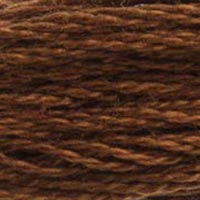
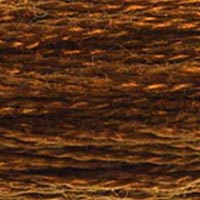
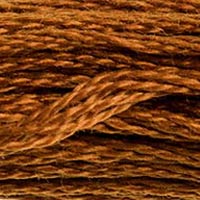
How DMC 300 Looks on Fabric
The same thread appears different depending on your fabric. Always test on your project fabric.
White Aida
Cream / Ecru
Black Aida
Pairs Well With
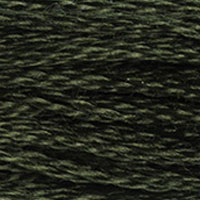
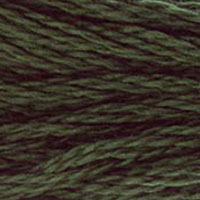
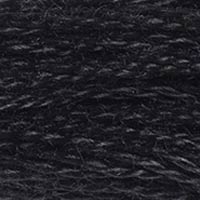
DMC colors commonly used alongside 300 Very Dark Mahogany.
Suggested Palette
Shading Companions
Detailed Conversions
Where to Buy DMC 300
This section contains affiliate links. We may earn a small commission at no cost to you.
Related Guides
Free Printable Thread Conversion Chart
Pick a brand and download a printable chart mapping all 552 DMC colors to that brand's closest equivalents. Free — no signup needed.
Opens in a new tab. Use your browser's Print → Save as PDF.